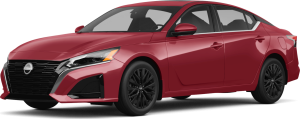

A practical guide to navigating I-26 commutes during Orangeburg's foggy fall mornings. Learn how the 2026 Nissan Altima's standard safety suite, including Intelligent Forward Collision Warning and Lane Departure Warning, supports low-visibility highway driving, and discover whether FWD or AWD makes sense for your specific route between Orangeburg, Columbia, or Charleston.
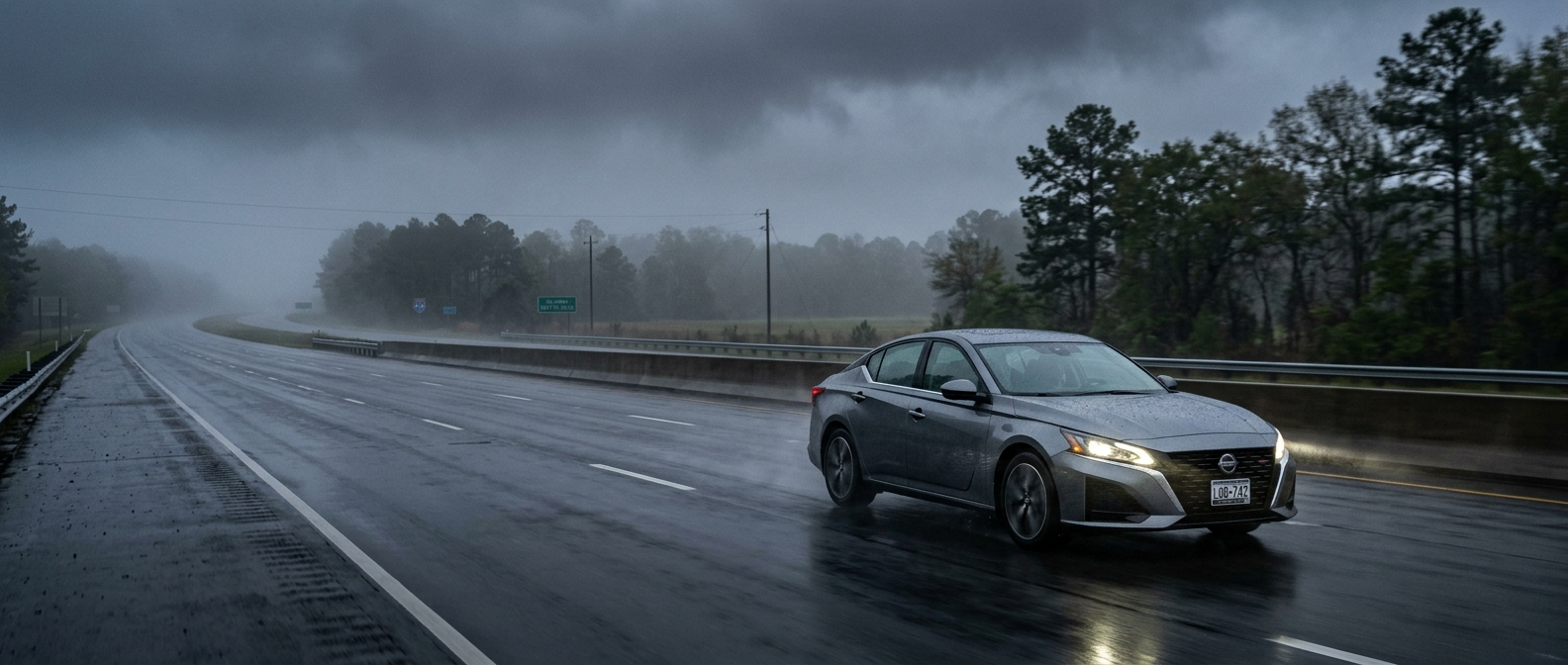
The I-26 corridor through Orangeburg County is running fog advisories right now, and that colors the whole commute. NWS Columbia issued Dense Fog Advisories for Orangeburg County on October 1 and 2, with visibility dropping to a quarter mile or less. None of that is abstract. We're talking about your drive to Columbia or Charleston, in the dark, on a highway where conditions can shift completely within a mile. The 2026 Nissan Altima's a genuinely good answer to that commute. Not because of hype. It ships with a standard safety suite built for low-visibility highway situations, and the FWD-versus-AWD question has an honest, specific answer for Orangeburg drivers that plenty of articles skip right past.
Browse our 2026 Nissan Altima inventory and see what we have on the lot right now.
Where Do You Park, and When Do You Leave?
The logistics of an I-26 commute from Orangeburg look simple on paper and turn genuinely tricky in October, so the smart play is to settle your parking before you leave and time your departure around the fog instead of the clock. We map out the three most common routes below.
| Destination | Suggested Departure | Park/Arrive Strategy | Altima Fit Note | Fog Tip |
|---|---|---|---|---|
| Columbia (approx. 40 min NW) | Before 7:00 a.m. | Park in a structured garage downtown; the sedan's 15.4 cu ft trunk handles a full laptop bag and gym gear without touching the rear seat | FWD at 30 mpg combined makes this round-trip very efficient | Leave before ground fog peaks near Lake Marion (usually before sunrise, burns off by 10 a.m.) |
| Charleston (approx. 75 min SE) | Before 6:30 a.m. | Surface lots near the peninsula; the Altima's tight turning radius helps in older lot layouts | AWD option worth a look if you cross the I-26/I-526 interchange in low-light conditions regularly | Keep headlights on through Orangeburg County; visibility can drop fast near the ACE Basin lowlands |
| Orangeburg city center (local) | Flexible | Street parking on Russell Street or college-area lots near Claflin and SC State are generally open by 7:30 a.m. | Either trim handles local surface streets easily | Morning fog near the Edisto River corridor can linger; give the Safety Shield 360 a chance to do its job |
A few things are worth saying plainly. Fog in the Midlands is a fall phenomenon. Cooler air moving in hits the humidity that's been sitting over Lake Marion and the river systems since August, and the result is the kind of zero-visibility mornings that shut down bridges on nearby I-95 just last week. If you're running the Columbia corridor early, leaving before that fog peaks gives you the clearest windows.
If you can't leave early, slow down and use your headlights. That guidance comes straight from NWS.
How the Altima Handles Itself When Visibility Drops
The 2026 Altima earns its commuter reputation when the fog rolls in, mostly on the strength of its standard driver-assist tech, though it won't see through dense fog any better than your own eyes can, so treat it as backup rather than a reason to keep your speed up. We'll walk through the parts that matter.
See current Altima trims and availability
Nissan Safety Shield 360 is standard on every single 2026 Altima. Both trims, no packages required. The suite includes six active systems. Those are Automatic Emergency Braking with Pedestrian Detection, Blind Spot Warning, Rear Cross Traffic Alert, Rear Automatic Braking, Lane Departure Warning, and High Beam Assist. What most articles on this topic miss is the Intelligent Forward Collision Warning. That system monitors up to two vehicles ahead of you. So if the car in front of you's trailing an SUV that just hit its brakes hard in the fog, the Altima reads that chain reaction and alerts you earlier than a standard forward-collision system would. On a foggy I-26 morning when taillight patterns are hard to read through mist, that extra fraction of a second matters.
Lane Departure Warning pulls its weight here too. Ground fog on the Midlands flats can make lane markings harder to track during the commute. The system watches those markings through a forward-facing camera and alerts you if the car starts drifting without a turn signal. On the SR trim, Intelligent Lane Intervention goes a step further and applies gentle steering input to guide the car back toward center.
Now the AWD question, and we'll give you the straight version. The Altima's Intelligent AWD is a genuine option worth discussing for I-26 commuters, but it doesn't make itself a given for Orangeburg. Here in the Midlands, we don't see prolonged freezing conditions the way upstate SC does. Our fall and winter roads run predominantly wet, not iced over. The EPA-rated fuel economy difference is real too. FWD delivers 30 mpg combined, and AWD drops to 28 mpg combined (per Nissan's published EPA figures). On a 80-mile daily round trip to Columbia, that gap adds up over months. If you're running to Columbia five days a week in early mornings on a wet highway, FWD with the standard safety suite handles the actual conditions well. If you're doing the Charleston run regularly and crossing elevated interchange sections in low visibility, or you feel the psychological weight of wet-road launches in the dark, the AWD option's a reasonable call. Just be clear about which situation applies to you.
Explore Financing for Your Altima
Before You Head Out: Your Pre-Commute Checklist
The Altima doesn't need much fussing before a cold-morning drive, and a few minutes of fall prep is all this list asks, but skipping it is where a wet, foggy I-26 run gets riskier than it needs to be, so treat these steps as a quick routine before you pull out onto the highway.
- Tire pressure check. Temperature swings from summer to fall lower tire pressure, roughly one PSI per 10-degree drop in ambient temperature. Underinflation shrinks the contact patch and hurts stopping performance on wet pavement. Check your tire pressure on a cool morning, not after a drive.
- Headlights on, always. In fog or overcast conditions, low beams help other drivers see you as much as they help you see ahead. The Altima's High Beam Assist handles bright and dim switching automatically, but starting in low-beam mode's your call. Make it early.
- Cabin defogging first. The Altima's climate system is straightforward. On cool, damp mornings, run the front defogger with the air conditioning on until the windshield's fully clear before you move. Yes, even in fall. The AC pulls moisture out of the air.
- Leave the appropriate gap. NWS guidance for dense fog comes down to deliberate distance. Give yourself twice your usual following distance on the highway. Safety Shield 360 helps, but it doesn't replace the gap.
- Service interval timing. Fall is a natural point to check brake pad wear and wiper blade condition before wet-season commuting really sets in.
Schedule a pre-season service check
Lock in a service appointment before cooler weather fully arrives, and we can check your brakes, tires, and wiper blades in one visit.