
Connect with us!

CATEGORIES

09-18-26

How to Choose the Right 2026 Pathfinder Trim for School-Year Family Safety

A practical guide to matching 2026 Pathfinder trims to school-year family needs. Learn how Safety Shield 360, ProPILOT Assist, and LATCH compatibility stack across grades, and why the SV trim hits the sweet spot for families commuting regularly on I-26. Discover which features matter most for carpool routines and highway drives.

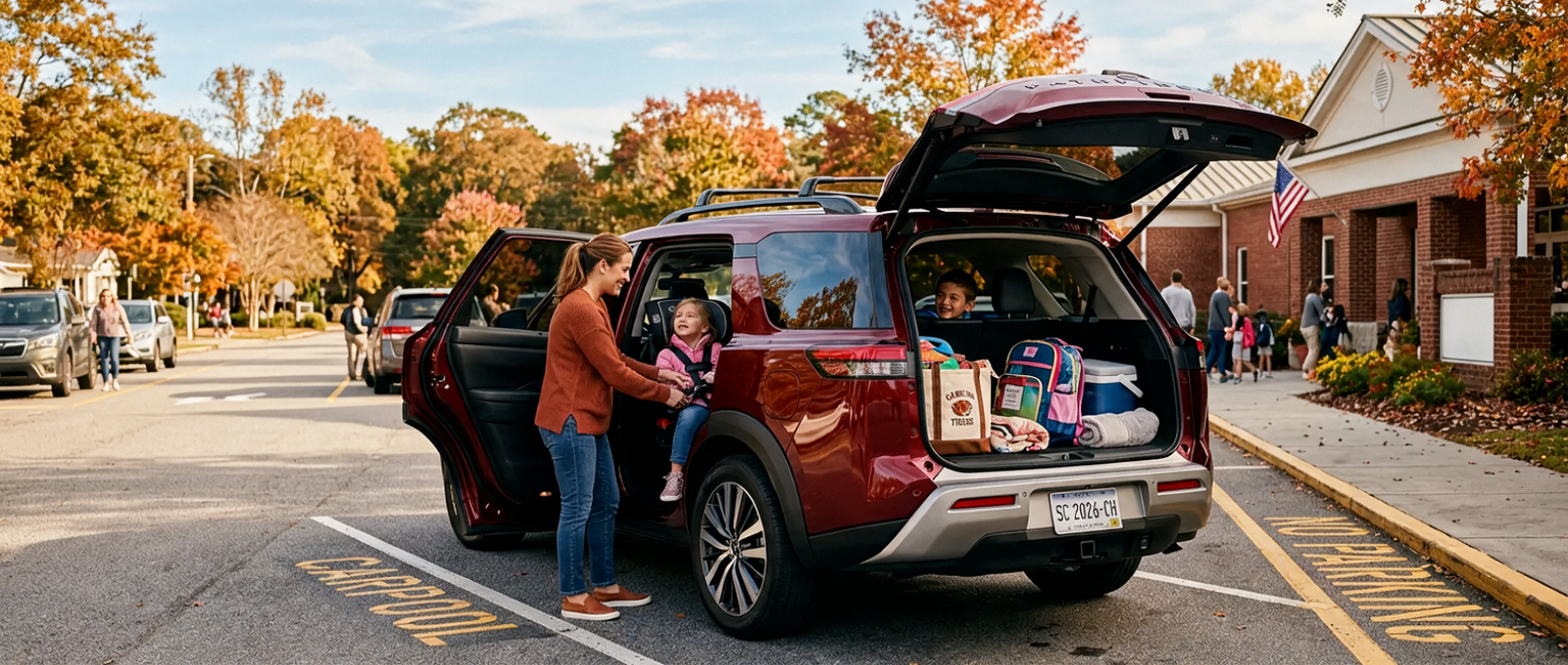
Back-to-school season changes how a family leans on its vehicle. You're suddenly running a fixed schedule, a full carpool, car seats to work around, and a commute on I-26 twice a day, five days a week. The 2026 Nissan Pathfinder has a real safety story for exactly that routine. The features that matter most for a school-year family aren't spread evenly across the trims, though, and the one upgrade that reshapes the highway drive sits at a specific grade.

Read the lineup the right way and the pick gets simpler. Below is how we'd match a configuration to how your family actually drives.

The short version

  • Every 2026 Pathfinder includes Nissan Safety Shield 360 (automatic emergency braking, blind spot warning, rear cross traffic alert, lane departure warning, rear automatic braking) as standard equipment on all trims.
  • ProPILOT Assist (the hands-on highway system that manages steering, speed, and stop-and-go) starts at the SV grade and above.
  • The IIHS gave the Pathfinder its LATCH child-seat anchor system a "Good+" rating (the highest score), and Nissan's LATCH AND GLIDE lets the second-row seat tip and slide even with a car seat installed.
  • The Rock Creek is a real tradeoff: more ground clearance and off-road tuning, but its all-terrain tires run louder on pavement.
  • For most Orangeburg families doing the I-26 run to Columbia, the SV or SL grade hits the sweet spot.

Browse 2026 Pathfinder inventory at Nissan of Orangeburg

What Safety Features Actually Matter for a School-Year Family?

The Pathfinder's safety list runs long, but for a parent doing morning carpool not every feature pulls the same weight, and three of them actually define the decision. Crash protection sets the floor, child-seat compatibility saves you time every week, and the highway driver-assist is where the trims genuinely split apart.

First, passive crash protection. Nissan reports a 5-Star Overall Safety Rating from NHTSA for the 2026 Pathfinder, and the IIHS awarded it Top Safety Pick+ status. Both scores come down to how the structure holds up in a crash. Good ratings matter, but they set the floor rather than separate one trim from the next.

Second, child-seat compatibility. The IIHS gave the Pathfinder's LATCH anchor system a "Good+" rating, its highest mark for ease of installation and anchor availability. That reassurance shows up when you're pulling seats in and out several times a week. The Pathfinder also puts ceiling-mounted second-row vents on every trim (not just the upper grades), which earns its keep in South Carolina September heat when kids are rear-facing and the sun still hasn't dropped at pickup.

Third, active driver-assist on the highway. Highway driver-assist is where the trim choice turns into a real decision. Safety Shield 360 is standard on all grades, no exceptions. But ProPILOT Assist, which handles acceleration, braking, and steering on the freeway, starts at SV.

Safety FeatureSSVSLRock CreekPlatinum
Nissan Safety Shield 360 (full suite)StandardStandardStandardStandardStandard
Automatic Emergency Braking w/ Pedestrian DetectionStandardStandardStandardStandardStandard
Blind Spot WarningStandardStandardStandardStandardStandard
Rear Cross Traffic AlertStandardStandardStandardStandardStandard
Rear Automatic BrakingStandardStandardStandardStandardStandard
Intelligent Forward Collision WarningStandardStandardStandardStandardStandard
ProPILOT Assist + Intelligent Cruise ControlNot includedStandardStandardStandardStandard
HD Enhanced Intelligent Around View MonitorNot includedNot includedAvailableStandardStandard

The Feature That Changes the Highway Commute

ProPILOT Assist is where the SV grade earns its keep for families on the I-26 corridor, and it's the one upgrade worth understanding before you sign, though it won't buy you more crash protection than the base car already carries. At its core, it pairs lane-centering Steering Assist with Intelligent Cruise Control to help manage acceleration, braking, and steering on the freeway. It can even bring the Pathfinder to a full stop in stop-and-go traffic and get back up to your set speed. The S trim leaves it out, and that's a meaningful gap if you're doing a 40-minute run toward Columbia twice a day.

See financing options at Nissan of Orangeburg

Deciding between the S and SV comes down to one line on the spec sheet. Safety Shield 360 is identical on both. The ProPILOT gap is the single difference that turns up every school-day morning. For a family running I-26 all the time, that upgrade is worth understanding before you decide.

The SL layers on a 12.3-inch digital instrument cluster alongside the standard 12.3-inch touchscreen, so you get two large-format displays. It also brings available captain's chairs in the second row plus heated front and rear seats. None of that touches the safety suite, but it does lift the daily comfort for a loaded family vehicle.

Trim note: ProPILOT Assist is the same system at SV, SL, Rock Creek, and Platinum. You're not getting more highway-assist capability at the top grade, just more comfort and tech around it.
  • The Nissan press kit confirms ProPILOT Assist is standard on all 2026 grades (SV and above)
  • Nissan's LATCH AND GLIDE lets the second-row seat tip and slide even with a car seat installed, so you don't have to pull a seat to reach row three
  • The Pathfinder's 3.5-liter V6 produces 284 horsepower in standard trims (295 hp in the Rock Creek), paired with a 9-speed automatic
  • The EPA rates the 2026 Pathfinder FWD at 21 city / 27 highway / 23 combined MPG

Match the Trim to How Your Family Actually Drives

The Rock Creek deserves a straight word here, because it tempts a lot of families with its look and higher ride height, yet it truly fits only a narrow slice of them. It rides on an off-road-tuned suspension with more ground clearance than the Platinum (195 mm versus 180 mm), and it's the only grade making 295 horsepower. The tradeoff is the all-terrain tires. On pavement, where nearly every Orangeburg school run happens, those tires run noticeably louder. If your family lives on county roads or gravel, the Rock Creek makes sense. For school pickup and grocery runs on US-301 and US-601, the SV or SL stays quieter and handles it with room to spare.

See the Nissan Rogue if two rows fits your family better

Match the grade to your real routine with a simple framework.

S grade: Safety Shield 360 is complete here, but ProPILOT isn't included. Best fit for a family that drives mostly in town with limited highway time. We wouldn't steer a regular I-26 driver to this one.

SV grade: ProPILOT Assist arrives at the SV, and for a Pathfinder used on the highway all week, this is the floor we'd suggest. Child-seat compatibility matches every grade above it. Call it the value decision point in the lineup.

SL grade: The SL adds the digital cluster, available captain's chairs (easier third-row access), and available heated rear seats. The safety suite doesn't change. Right choice when the family spends long stretches in the cabin and second-row comfort matters.

Rock Creek: Same full safety suite and ProPILOT Assist. Worth the louder-tire tradeoff only if you genuinely drive off-pavement.

Platinum: The most comfort-forward grade, with a motion-activated power liftgate (useful when your hands are full of backpacks), quilted seating, and the HD Enhanced Intelligent Around View Monitor with Invisible Hood View. Same safety core as the SV.

Keep your Pathfinder's safety systems maintained

See What Your Current Vehicle Is Worth

For families weighing a step up from a two-row SUV, third-row access is the recurring question. The LATCH AND GLIDE system means a properly installed car seat in row two doesn't have to come out to let someone into row three. Nissan lists 16.6 cubic feet of cargo behind the third row, opening to 80.5 cubic feet with both back rows folded. That's room for a stroller, a couple of backpacks, and a week's worth of groceries without moving a seat.

The third row itself carries a real tradeoff. Nissan's own press materials acknowledge it's a tight space for adults. For younger children or kids up to middle school, it works fine. For an adult on a long I-26 run, it's not a comfortable seat.

Frequently Asked Questions

Does every 2026 Nissan Pathfinder come with blind spot warning?

Yes. Blind spot warning is part of Nissan Safety Shield 360, which Nissan confirmed is standard equipment on every 2026 Pathfinder grade, from S through Platinum. You don't need to step up to a higher trim to get it.

Is ProPILOT Assist standard on the base Pathfinder?

No. ProPILOT Assist, which manages lane-centering, speed, and stop-and-go braking on the highway, is standard beginning at the SV grade. The base S trim includes the full Safety Shield 360 suite but doesn't include ProPILOT Assist or Intelligent Cruise Control. For families who drive I-26 regularly, that distinction is worth factoring in before you buy.

By the Nissan of Orangeburg Team | September 2026
Nissan of Orangeburg2827 St Matthews Rd, Orangeburg, SC 29118

(803) 813-1000

Read More
CATEGORIES »
TAGS »

09-17-26

Nissan Altima vs. Sentra on I-26: Which One Is Actually Right for Your Drive?

A practical guide to choosing between two Nissan sedans for I-26 commuting. The Sentra delivers better fuel economy at 38 highway MPG and suits solo daily runs, while the Altima offers a larger fuel tank, quieter cabin, and more passing power for longer hauls and multiple passengers. Learn which sedan fits your drive pattern and what specs matter most for regular interstate travel.

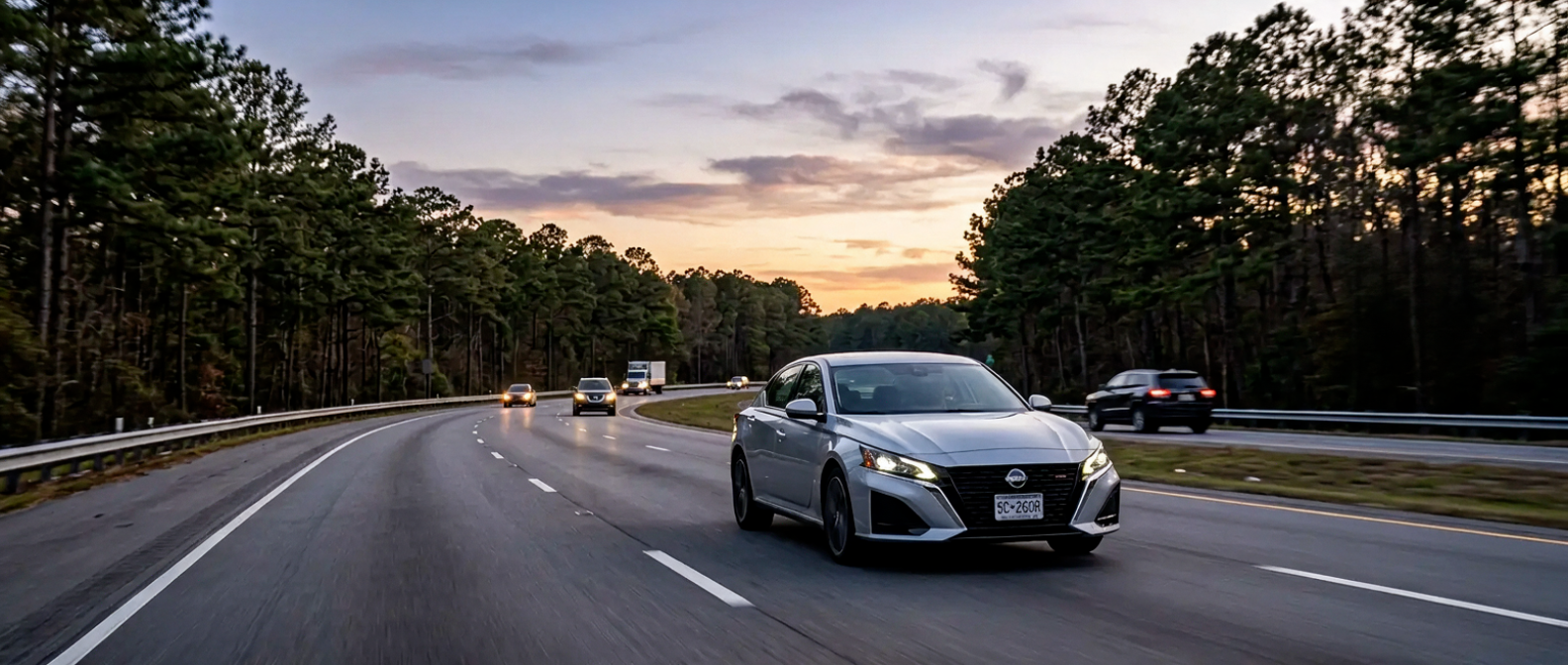
If you're running that Orangeburg-to-Columbia stretch on I-26 five days a week, or making regular hauls down to Charleston, the plain answer is both sedans will get you there. One of them will wear you out less. And it's not always the one you'd guess.

The short version comes down to how you use the road. The 2026 Sentra wins on highway fuel economy and saves you real money over a year of commuting. The 2026 Altima wins on cabin quiet, passing confidence, and the effortless long-haul feel that matters when you've got 75 miles of interstate ahead of you. Neither answer is wrong. It depends on how you use the road.

How Do They Actually Compare on the Road?

The number that matters most for I-26 is highway MPG, and there's a real gap. Nissan estimates the 2026 Sentra (S/SV trims) at 38 MPG highway. The 2026 Altima FWD comes in at 36 MPG highway. Two miles per gallon sounds small until you do the math over a year of driving.

What the spec sheet won't tell you is the rest of the story. The Sentra's 2.0-liter engine produces 149 horsepower, and under hard acceleration (think merging onto I-26 from the US-301 interchange and trying to slot into 70 mph traffic), the CVT can get loud. That's a real tradeoff. The Altima's 2.5-liter engine puts out 188 horsepower on FWD trims, and the extra grunt makes those merge situations feel unhurried. On a flat South Carolina interstate, 39 horsepower isn't a big deal during cruise. It shows up exactly when you need to respond quickly.

Browse our current Nissan inventory to see what's in stock right now.

2026 Altima vs. Sentra: I-26 Highway Comparison

Category2026 Sentra (S/SV)2026 Altima (FWD)
Highway MPG (EPA-estimated)38 MPG36 MPG
Engine / Horsepower2.0L / 149 hp2.5L / 188 hp
Torque146 lb-ft180 lb-ft
Fuel tank12.4 gallons16.0 gallons
Est. highway range (full tank)~471 miles~576 miles
Trunk space14.3 cu ft15.4 cu ft
AWD available?NoYes (SR trim)
ProPILOT Assist available?Yes (select trims)Yes (available)

The tank size difference is the one worth a second look. The Altima's 16-gallon tank means a full Charleston run (about 75 miles southeast) barely touches the needle. At 38 MPG highway, the Sentra's 12.4-gallon tank still gives you plenty of runway for a Columbia run, though you'll stop more often on longer trips.

Where Do You Charge Up (So to Speak) for the Trip?

Charging up here means fuel stops, so the question for I-26 commuters is how often you're stopping and where. On the Orangeburg-to-Columbia run, there are multiple well-served exits between here and I-20. The Sentra's smaller tank is genuinely fine for that 40-mile leg. Where the Altima's larger tank starts paying off is the 75-mile push toward North Charleston, when you'd rather not think about fuel at all.

Our finance team can walk you through the numbers on either sedan when you're ready to talk specifics.

ProPILOT Assist is available on select trims of both sedans. On the Altima, it's offered on available configurations and uses adaptive cruise control plus lane-centering to reduce the mental load on a long I-26 cruise. On a 40-minute interstate run, that's a genuine quality-of-life feature. The Sentra also offers ProPILOT Assist on select trims for 2026, so this isn't an Altima-exclusive advantage. What matters is which trim you're buying and whether it's equipped.

Tip for I-26 drivers: ProPILOT Assist relies on clear lane markings. The I-26 construction zones between Orangeburg and Lexington County periodically paint over or obscure lane lines. The system may pause its steering assist in those sections. Adaptive cruise still works, but don't expect full lane-centering through active work zones.

Pre-Trip Checklist: Setting Up Either Sedan for a Regular I-26 Run

  • [ ] Confirm ProPILOT Assist is active and the forward camera view is clear (clean the windshield)
  • [ ] Set your adaptive cruise speed before entering the highway, not while merging
  • [ ] Note your fuel level. A Sentra at a quarter tank leaves roughly 117 miles of highway; an Altima at a quarter tank leaves roughly 144
  • [ ] Tire pressure check before any trip over 50 miles (both sedans specify 35 psi; low pressure raises fuel consumption a fair amount on CVT-equipped cars)
  • [ ] If hauling passengers to Columbia or Charleston, factor cargo weight: neither sedan is a hauler, but the Altima's extra torque makes a loaded cabin feel less strained
  • [ ] Set your Eco Mode (Sentra) or keep throttle steady (Altima) to hit the rated highway numbers consistently

Get Financing for Your Next Nissan Sedan

Plan Your Drive This Way

The decision is cleaner than most comparison articles admit. Here's what we'd tell a neighbor walking onto our lot today.

For a daily solo commute to Columbia where you're watching every tank of gas, the Sentra is the smarter pick. The EPA-estimated 38 MPG highway is real (NissanConnect trip computers tend to confirm it on flat South Carolina interstates), and the smaller sedan is lighter and easier to park wherever you end up downtown. The Sentra fits that job best.

For multiple passengers, frequent Charleston runs, or drivers who've spent time in a Sentra and felt like they were working harder than they should during merges, the Altima earns the bump. Nissan's Zero Gravity front seat design is built to reduce fatigue on longer drives, and it shows on a 75-mile leg. The cabin also runs markedly quieter at highway speed than the Sentra under load. That's a real difference.

One caveat on the Altima worth naming honestly. For 2026, Nissan simplified the lineup to two grades (SV and SR). The old entry-level trim is gone. If you were counting on a base-grade entry point, that option doesn't exist this year. The Sentra still has four trims (S, SV, SR, SL), with the entry S offering genuine value for a straightforward commuter setup.

See available Altima trims on our lot and compare them to what the Sentra S or SV offers. The gap in comfort features between the two nameplates has narrowed considerably in 2026.

For most Orangeburg commuters, the decision comes down to this: Sentra for solo daily runs where MPG is the priority; Altima for longer hauls, bigger families, or anyone who's felt underpowered during a fast merge.

Frequently Asked Questions

Does the 2026 Sentra have enough power for highway driving?

For steady-state highway cruising on I-26, the 2026 Sentra's 149-horsepower, 2.0-liter engine handles it without drama. Where power feels thin is aggressive merging from a short on-ramp into fast-moving traffic. The CVT transmission keeps the engine in its efficiency range during cruise, but hard acceleration requests produce more engine noise than you'd hear in the Altima. If your on-ramp is short or your merge lane is busy, that 39-horsepower difference between the two is noticeable.

Is the Altima's fuel economy good enough for regular I-26 commutes?

Yes. Nissan estimates the 2026 Altima FWD at 36 MPG highway (EPA-estimated figures per Nissan). That's a strong number for a midsize sedan with 188 horsepower. On a 40-mile Orangeburg-to-Columbia run, the Altima's 16-gallon tank means you could run three full round trips before you're looking for a gas station. The trade-off compared to the Sentra is two fewer highway miles per gallon, which adds up over a year of five-day commuting but isn't a dealbreaker for most drivers.

Can I get ProPILOT Assist on the Sentra, or is it only on the Altima?

ProPILOT Assist is available on select 2026 Sentra trims, not just on the Altima. For 2026, Nissan made ProPILOT Assist available across both nameplates on qualifying trim configurations. It uses adaptive cruise control and lane-centering to reduce highway driving fatigue. The practical difference is that you need to confirm the specific trim is equipped, because not every Sentra or Altima on the lot includes it. Our team can check exactly which units in our inventory carry the feature before you come in.

Nissan of Orangeburg

2827 St Matthews Rd, Orangeburg, SC 29118

(803) 813-1000

Read More
CATEGORIES »
TAGS »

09-16-26

4 Best Nissan Models for Visiting Lake Marion in September

A guide to choosing the right Nissan for a September visit to Lake Marion. Learn why the Frontier excels for boat towing, why the Pathfinder suits multi-generational family camping, why the Rogue handles day trips efficiently, and why the Sentra works for budget-conscious solo anglers. Each vehicle addresses different trip needs and priorities.

September lands right in the sweet spot at Lake Marion. The brutal Lowcountry heat starts backing off, the water begins to cool from its late-summer peak, and SCDNR reports that topwater bass action over the grass beds picks back up just as the catfish start biting hard on cut bait in the shallows. Call it a serious fishing window. Santee State Park sits on the south shore of that 110,000-acre reservoir, and it gives you two boat ramps, 158 campsites, and pier cabins hanging over the water.

A fair question before a Lake Marion run is which Nissan gets you there right. Our answer depends on what your trip actually looks like. If you're trailering a boat, you need confirmed tow numbers. If you're sleeping over with the whole crew, you want plenty of cargo room. A day run down US-301 rewards fuel economy that doesn't sting on the way back.

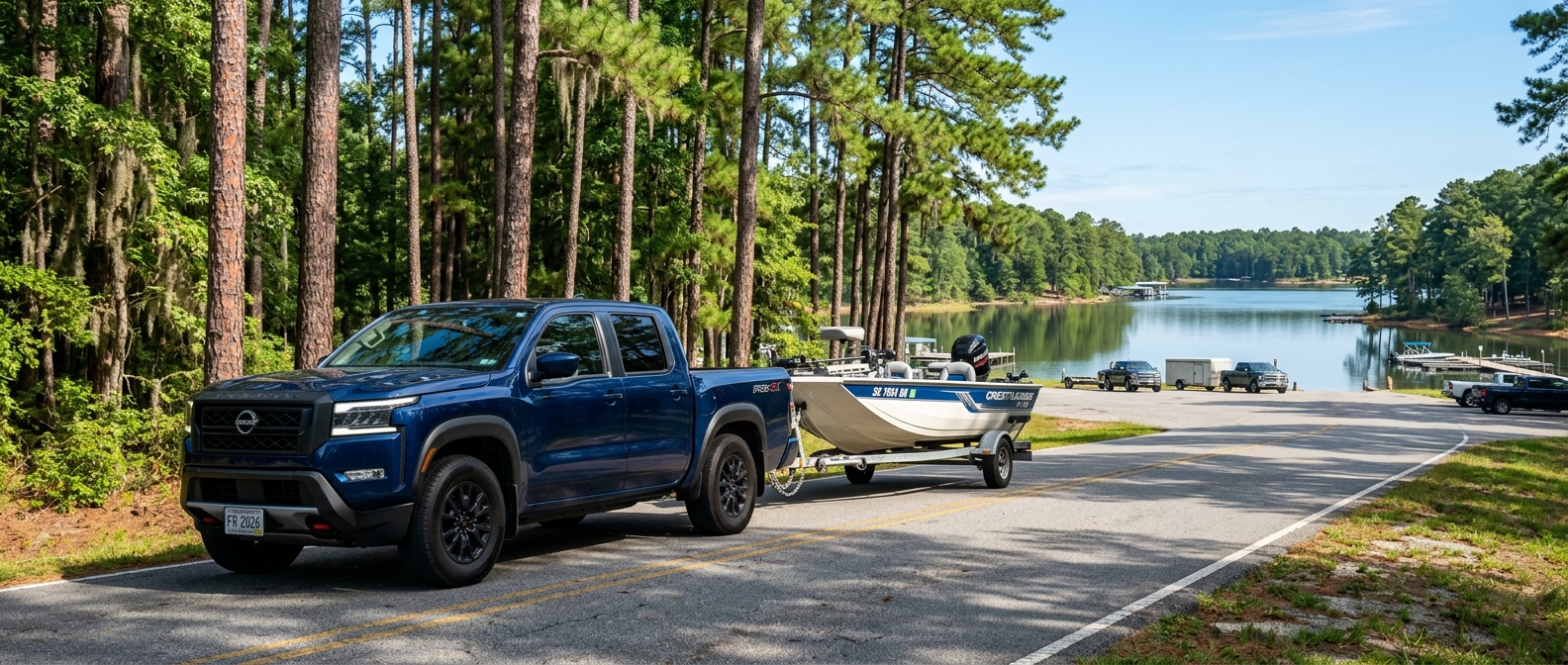
The 2026 Nissan Frontier is our top pick for Lake Marion in September, and the reason is straightforward. It's the only vehicle in the Nissan lineup that can pull a loaded bass boat, handle a gravel access road, and still haul your cooler and camp chairs in the bed without asking you to choose.

The Rankings at a Glance

RankPickBest ForStandout Spec
12026 FrontierTowing a boat, gravel ramps, gear-heavy anglersUp to 7,150 lb towing (when properly equipped), per Nissan
22026 PathfinderFamily camping, 6-8 passengers, overnight trips80.5 cu ft cargo, up to 6,000 lb towing (properly equipped), per Nissan press kit
32026 RogueDay trips, fuel efficiency, solo or couple fishing runsEPA-rated 32 mpg combined (FWD), 74.1 cu ft cargo (seats folded)
42026 SentraBudget-conscious day-trippers, no trailerEPA-rated up to 38 mpg highway

The 2026 Nissan Frontier: Built for the Boat Ramp

The 2026 Frontier earns the top spot whenever a boat is part of the plan. It can pull a loaded trailer up a wet ramp and still carry gear in the bed, though it asks for more fuel than the SUVs below and reads as more truck than a bare day trip needs. Santee State Park has two boat ramps. On a September Saturday when the bass are active, those ramps get busy, and you don't want a vehicle that hesitates under trailer weight on a sloped concrete pad. The 2026 Frontier's standard 3.8-liter V6 produces 310 horsepower and 281 lb-ft of torque, paired with a 9-speed automatic, and when properly equipped it tows up to 7,150 pounds (per Nissan USA). Those numbers cover most aluminum fishing boats and bass rigs on the water around here.

The tradeoff sits at the fuel pump. The Frontier gets around 20-21 mpg combined in real-world driving, so it behaves like a truck rather than a commuter. The 45-minute run down US-301 from Orangeburg to the Santee corridor costs more fuel than the Rogue will. If you're not towing and not hauling significant gear, the Frontier is more truck than the trip needs.

For a loaded-trailer run to Lake Marion, though, the calculus flips. The Utili-track bed system secures coolers, rods, and wet gear without sliding around. And the available 4x4 means a rain-softened boat ramp won't have you white-knuckling it.

Buying caution: Frontier tow ratings vary meaningfully by configuration. The 7,150-lb figure applies to the King Cab Long Bed 2WD when properly equipped. Crew Cab and 4x4 versions carry different maximums, so before you hitch a boat, verify the tow rating on the door-jamb sticker of your specific truck. Don't lean on the headline spec alone.

The 2026 Nissan Pathfinder: Room for All Eight of Them

The 2026 Nissan Pathfinder is the right call for a full-family overnight. It seats up to eight and opens to a genuinely large cargo hold, though the third row works better for kids than for adults on a long stretch. Picture grandparents, parents, three kids, and the family dog all wanting a cabin stay at Santee State Park. The Rogue seats five. The Frontier is a truck, and the Pathfinder settles it.

Nissan's press kit spells out the numbers. The 2026 Pathfinder seats up to eight and opens to 80.5 cubic feet of cargo with both rear rows folded flat. Even with all three rows in use, there's 16.6 cubic feet behind the third row, enough for backpacks, a tackle box, and the bag of snacks that keeps the peace on a 45-minute drive. The Pathfinder's 3.5-liter V6 (284 hp) tows up to 6,000 pounds when properly equipped on Rock Creek, Platinum, or with the SV/SL tow package, so a pontoon trailer is within reach for the right configuration.

The tradeoff shows up in the way back. The third row is functional for kids but tight for adults over about 5'10", who'll know it by the time you reach Santee. For a 45-minute trip from Orangeburg that's fine. For a cross-state haul, have the conversation before you leave.

The 2026 Pathfinder earned a NHTSA 5-Star Overall Safety Rating, per the 2026 Nissan press kit, making it one of the strongest family-safety arguments in the mid-size SUV class.

Get Pre-Approved for Your Lake Marion Rig

The 2026 Nissan Rogue: The Smart Day-Trip Pick

The 2026 Nissan Rogue is the smart pick for a no-trailer day run. Its EPA-rated fuel economy and folding cargo hold cover two people and light gear cheaply, though it can't tow a boat in any real way. Not every Lake Marion trip involves a boat or a tent. Some of the best September bass runs start at 5 a.m. and end at noon, with two people, a pair of kayaks rented on-site from Santee State Park's automated kiosk, a dry bag, and a cooler. For that trip, the Rogue makes more sense than either vehicle above.

The EPA rates the FWD Rogue at 29 city, 36 highway, and 32 combined, which adds up on a corridor run. It rides comfortably over I-26 and stays composed on the two-lane stretch of US-301.

The Rogue carries 36.5 cubic feet of cargo behind the second row and 74.1 with the seats folded. Kayak gear, chairs, and a weekend cooler go in easily.

The tradeoff is towing. The Rogue isn't rated for trailer towing in any meaningful capacity. If your Lake Marion trip involves a boat, you need one of the vehicles above. If it doesn't, the Rogue is the most enjoyable drive of the three for a day out.

The 2026 Nissan Sentra: Day-Trip Value Without the Overhead

The 2026 Nissan Sentra is the value play for a solo angler or a couple heading out to fish from the park pier or hike the 7-mile biking trail, because its EPA highway number gets you to Santee and back on little fuel, though its trunk rules out a full family's camping load. Not every trip to Lake Marion needs a truck or a three-row SUV. The EPA rates the Sentra at up to 30 city and 38 highway. Orangeburg to Santee and back on less than half a tank, no trailer, no problem.

The limit is the trunk. The Sentra's trunk holds 14.3 cubic feet. Rods fit if they break down or you run shorter spinning gear, and a cooler and a tackle bag go in without drama. What won't fit is everything you'd bring for a family camping overnight. For that, step up to the Rogue at minimum, or the Pathfinder if you're bringing the whole group.

September in Orangeburg County stays warm and humid through mid-afternoon. The Sentra's air conditioning handles a South Carolina fall just fine, and the fuel savings on a day run are real.

The Frontier Earns the Top Spot

The Frontier takes the top spot because getting a boat in the water when the bass are feeding is what a September trip to Lake Marion comes down to, and no other Nissan pulls a loaded trailer up a ramp while carrying gear the way it does. Santee State Park's boat ramps are the gateway to a 110,000-acre fishery with some of the best largemouth bass, catfish, and striped bass in the state. The 2026 Frontier, with its 310-hp V6 and up to 7,150-pound tow capacity (when properly equipped, per Nissan), is the vehicle on our lot that handles that job without compromise.

The Pathfinder takes the camping trip with a full family. Day trips without a trailer belong to the Rogue. The Sentra takes the fuel-efficient solo run. Every trip to Lake Marion has a right Nissan. We can help you figure out which one that is.

Nissan of Orangeburg

2827 St Matthews Rd, Orangeburg, SC 29118

(803) 813-1000

Read More
CATEGORIES »
TAGS »

09-15-26

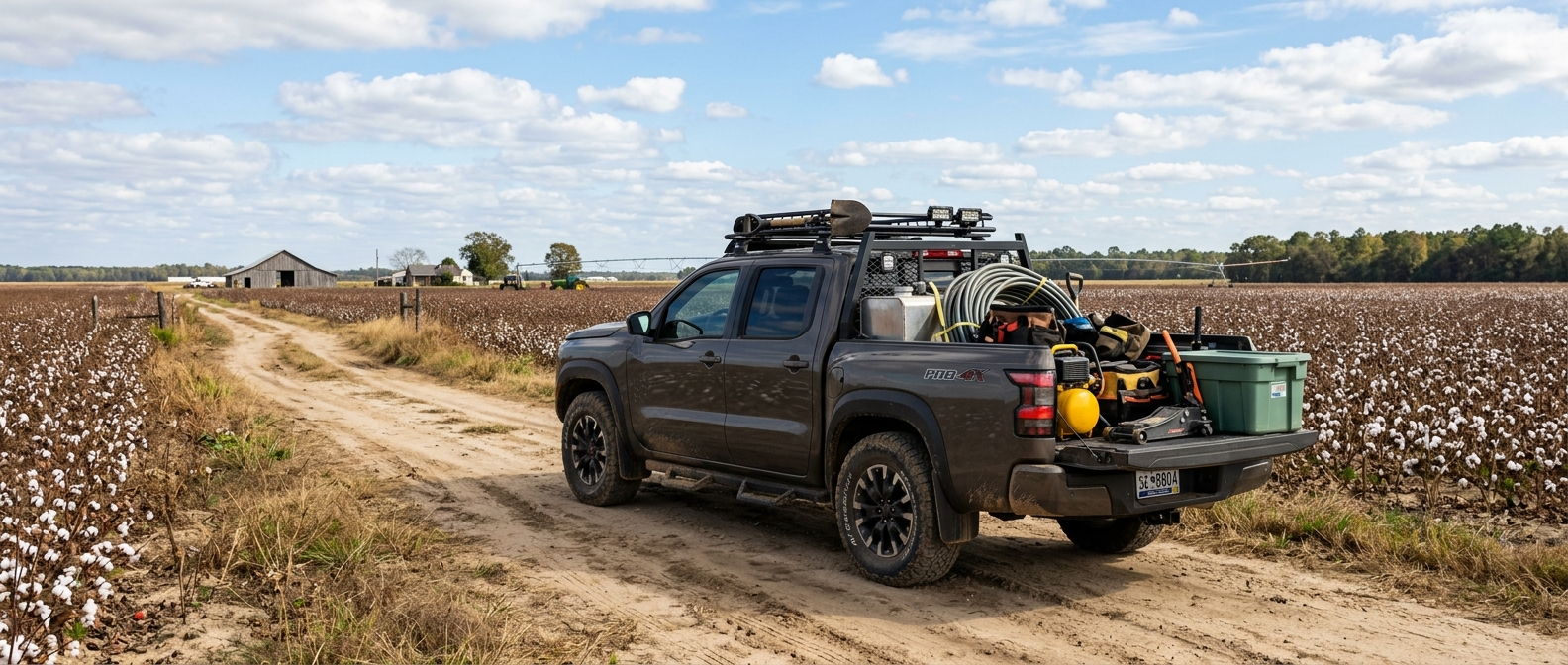
2026 Frontier SV vs PRO-4X: Which Work Truck Fits Fall Projects Near Cameron?

A practical guide to comparing two 2026 Frontier trims for fall work in Calhoun County. Learn how the SV 4x4 and PRO-4X handle different terrain, where their towing and payload capacities actually differ, and which truck makes sense for graded roads versus soft field edges. Both deliver the same 3.8L V6 power, but their off-road hardware and traction systems separate them when conditions turn muddy.

The SV handles the vast majority of what Calhoun County fall work throws at a truck. If you're regularly pulling a loaded equipment trailer onto soft field edges or muddy fire roads off US-21, though, the PRO-4X earns its keep in ways that show up exactly when you need them.

The short version

  • Both trims share the same 3.8L V6 with 310 hp and 281 lb-ft of torque. You're not giving up power either way.
  • The SV 4x4 tows more on paper (up to 7,150 lbs in King Cab configuration vs. around 6,680 lbs for the PRO-4X Crew Cab) because the PRO-4X's off-road hardware adds weight.
  • The PRO-4X's electronic locking rear differential and terrain drive modes are the honest differentiator for genuinely soft or slick ground.
  • If your fall projects stay on paved or graded roads, the SV 4x4 is the smarter buy. If you work field edges, the PRO-4X is the one you'll thank in November.
  • Both are 22 miles from our lot in Orangeburg. We can put either one in front of you today.

Fall comes fast around Cameron. The cotton harvest in Calhoun County usually hits its stride in early October, and that means loaded trailers, field equipment moving between properties, and errands that take you from gravel county roads to soft, damp field edges in a single morning. The 2026 Nissan Frontier gives you two real options for that kind of work, the SV 4x4 and the PRO-4X. Choosing between them isn't really about prestige. It comes down to where your truck will spend its worst hours.

What's the Real Difference Between the SV and PRO-4X?

The engine is identical across both trims, so what separates the SV from the PRO-4X comes down to the hardware bolted underneath and how each truck deals with a loss of traction, not how much power sits under the hood, because every 2026 Frontier makes the same output. That output is a 3.8-liter naturally aspirated V6 rated by Nissan at 310 horsepower and 281 lb-ft of torque, paired with a 9-speed automatic. No trim gets more power. Where the two trucks split is in how they handle traction loss and what hardware they carry.

FeatureFrontier SV 4x4Frontier PRO-4XWork-Use Verdict
Engine / Torque3.8L V6, 281 lb-ft3.8L V6, 281 lb-ftTie
Max Towing (properly equipped)Up to 7,150 lbs (King Cab config)Up to 6,680 lbs (Crew Cab)SV edge on raw capacity
Max PayloadUp to 1,620 lbsLower (Crew Cab, off-road gear weight)SV edge
EPA MPG (4x4)17 city / 22 hwy16 city / 21 hwySV (1 MPG advantage)
Rear DifferentialOpenElectronic lockingPRO-4X matters on soft ground
Terrain Drive ModesStandard 4WDRock, Sand, Mud, On-Road, Hill DescentPRO-4X
Off-Road ShocksStandardBilstein performance shocksPRO-4X
Skid PlatesNoYesPRO-4X
All-Terrain TiresNo (all-season)StandardPRO-4X
Infotainment Screen12.3-inch NissanConnect12.3-inch NissanConnectTie
Safety Shield 360StandardStandardTie
Bed Options5-ft or 6-ft long bed5-ft or 6-ft long bedTie
The PRO-4X's electronic locking rear differential is the deciding feature for anyone working soft Calhoun County soil in October. Without it, a standard open diff loses traction when one rear wheel lifts or spins free on a wet field edge.

Does the Towing Difference Actually Matter for Fall Hauling?

For the trailers most fall work pulls around Cameron, the towing gap barely registers, though it flips the way you'd expect, since the PRO-4X wears the tougher badge and still tows a little less on paper than certain SV configurations you can order. Nissan's own specs show the King Cab S and SV 4x2 configs peak at 7,150 lbs, while the PRO-4X Crew Cab comes in around 6,680 lbs. The reason is straightforward. The PRO-4X carries heavier off-road components (Bilstein shocks, skid plates, larger tires), and that added curb weight cuts into rated towing capacity. Just physics at work.

For the farm work common around Cameron, that difference is narrow. A single-axle equipment trailer loaded with a mid-size tractor usually runs 4,000 to 6,000 lbs. Both trucks handle that with room to spare. If your trailer consistently pushes past 7,000 lbs, neither midsize Frontier is the call. A full-size hauler like the Nissan Armada steps in at that point, or you're shopping the Titan territory.

The payload story runs the same way. The EPA rates the 4x4 SV at 17 city / 22 highway mpg, and the PRO-4X 4x4 at 16 city / 21 highway. One mile per gallon over a 60-mile round trip to Orangeburg isn't nothing across a full harvest season, but it's not the reason to pick the SV either.

Our financing team can walk you through what a realistic monthly commitment looks like for either trim once you've picked your configuration.

Getting the Bed Right for the Job

For a working truck, bed length quietly decides more of this than most trim guides admit, and the 2026 Frontier gives you two to choose from, a 59.5-inch standard bed and a 73.3-inch long bed for the runs that carry real length. For anyone hauling lumber, fence posts, or sacked agricultural supplies, that 14-inch difference in usable length changes what you can load without strapping down an overhang. Load a full run of posts and that gap is the line between a clean load and one hanging over the tailgate.

Crew Cab note: Both the SV and PRO-4X come Crew Cab only in 2026, so five-passenger seating is standard. If maximum bed length is the priority and you don't need five seats, the base S in King Cab with long bed configuration gives you 49.6 cubic feet of cargo volume. The King Cab opens a different conversation. Come talk to our team if it makes sense for your setup.

The long-bed SV Crew Cab is worth a look for anyone who needs the full six feet behind five seats. The Frontier is one of the few midsize trucks to offer that combination, and for contract workers around Cameron running a crew to a job site, it's a legitimate advantage.

Utili-Track's channel system comes standard on the SV with the Convenience Package, which gives you adjustable tie-down cleats anywhere along the rail. For a working truck, that's not a luxury feature. It gives you load security on a bumpy run down Burke Road toward the field.

So Which Frontier Should You Pick for Fall Work Near Cameron?

Which Frontier to pick comes down to where the truck spends its worst hours, not where you picture it working, so the SV 4x4 is the smarter buy for graded roads and steady towing, while the PRO-4X is the one you'll want the day you park on a wet field edge in October. Here's how that breaks down.

Pick the SV 4x4 if: Your fall projects run on paved or graded county roads. You're pulling trailers to and from fixed sites. Fuel economy over a long harvest season matters to you. You want the most towing headroom in the Frontier lineup. A comfortable, connected cab (the 12.3-inch screen comes standard on the SV) matters during long days.

Pick the PRO-4X if: You routinely park on field edges in October. You haul during or after rain when soft ground is a real factor. You want the electronic locking rear differential for traction on demand without guessing which wheel is spinning. The Bilstein shocks and skid plates matter if your route runs across unimproved farm roads or through timber stands.

Both trucks ship with Nissan Safety Shield 360 across every trim, which includes Automatic Emergency Braking with Pedestrian Detection, Rear Automatic Braking, and Blind Spot Warning. You get the same suite regardless of which way you go. No safety compromise in either direction.

One honest tradeoff comes with the PRO-4X. Its all-terrain tires give up ride comfort on pavement, plain and simple, and they return a few fewer miles per gallon on the I-26 commute. For someone who splits time between field work and a regular run up toward Columbia, that texture difference is real and worth knowing before you decide.

Browse our current Frontier inventory and filter by trim and configuration to see what we've got on the lot right now.

FAQ

Does the 2026 Nissan Frontier PRO-4X tow more than the SV?

No. The PRO-4X actually tows slightly less than certain SV configurations. Nissan rates the PRO-4X Crew Cab 4x4 at up to approximately 6,680 lbs (when properly equipped), while the SV in King Cab configurations reaches up to 7,150 lbs. The PRO-4X's off-road hardware (Bilstein shocks, skid plates, all-terrain tires) adds curb weight, which reduces the rated towing capacity. For most fall hauling tasks around Cameron, both trucks are well within working range. If payload and maximum towing are the deciding factors, the SV 4x4 has the edge.

Is Nissan Safety Shield 360 standard on both the SV and PRO-4X?

Yes. Every 2026 Frontier trim, including both the SV and PRO-4X, ships with Nissan Safety Shield 360 as standard equipment. That suite includes Automatic Emergency Braking with Pedestrian Detection, Rear Automatic Braking, Blind Spot Warning, Lane Departure Warning, and Rear Cross Traffic Alert. You don't have to step up to the PRO-4X to get the full driver-assist package. By the Nissan of Orangeburg Team | September 2026
Nissan of Orangeburg2827 St Matthews Rd, Orangeburg, SC 29118

(803) 813-1000

Read More
CATEGORIES »
TAGS »

09-14-26

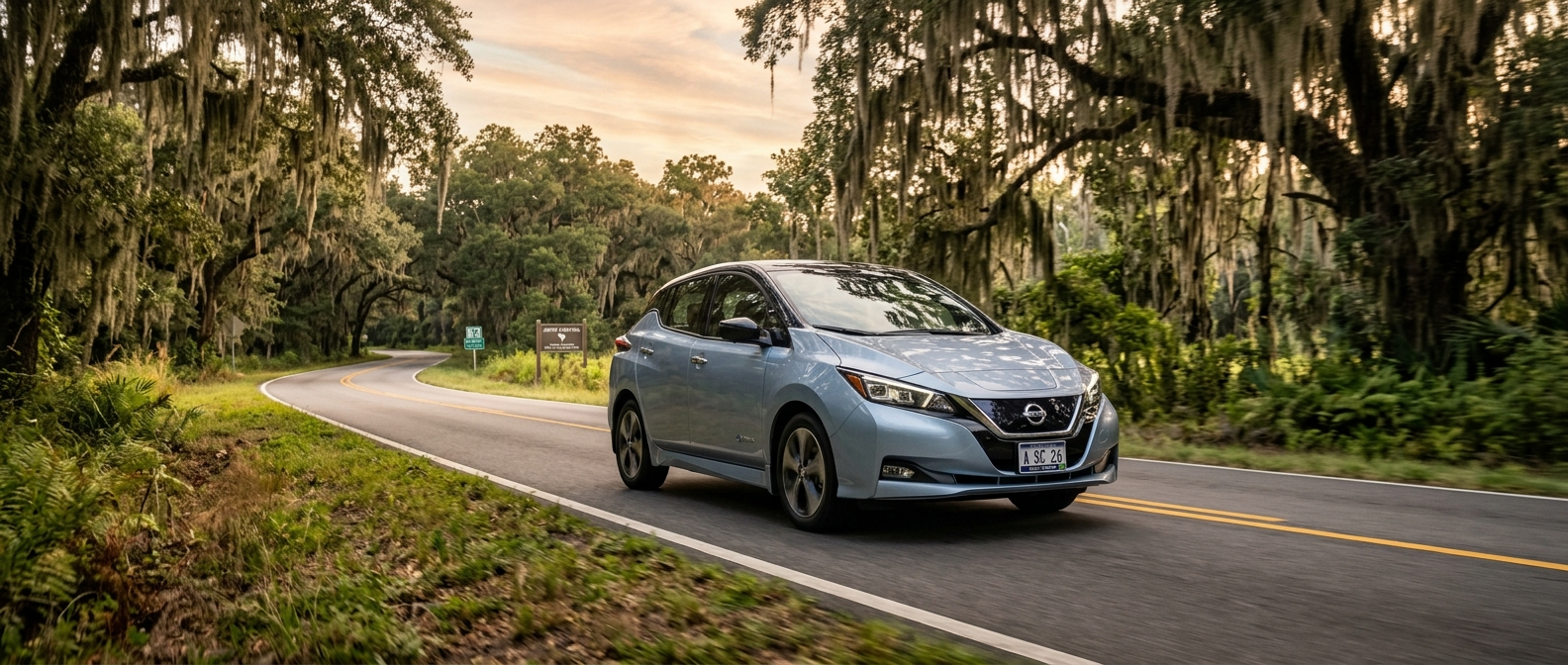
Orangeburg’s Heat and Humidity: How to Drive Your 2026 Nissan LEAF Efficiently

A practical guide to maximizing efficiency with the 2026 Nissan LEAF in Orangeburg's hot, humid climate. Learn how the liquid-cooled battery handles summer heat, master pre-conditioning and Eco mode, optimize regenerative braking and highway cruising, and maintain tire pressure year-round to preserve the EPA-estimated 303 miles of range and keep your commute predictable.

Orangeburg summers don't ease up. July and August routinely push past 90 degrees Fahrenheit, the humidity hangs heavy all day, and the air conditioning isn't optional. That combination puts a real load on a drive battery. The good part is that the 2026 Nissan LEAF was rebuilt from the ground up to handle it. For the first time in the nameplate's history, a liquid-cooled battery actively manages cell temperature through heat, fast-charging cycles, and sustained highway miles. You'll still want to drive it with intention, though. A handful of deliberate habits are the difference between getting the EPA-estimated 303 miles of range (S+ trim, per Nissan) and wondering why the number dropped. Here's what our team recommends.

Your Orangeburg Driving Reference: Do This, Not That

The situations below cover what you'll actually run into around Orangeburg County, on I-26, and on the US-301 and US-601 corridors, and each one pairs the efficient move with the quiet habit that drains range, so you get both sides at a glance. A quick scan before you take delivery is worth it.

SituationDo ThisSkip This
Car parked and still plugged inPre-condition the cabin through the MyNISSAN app before you unplugLetting the interior bake, then running AC hard off the drive battery
In-town driving (Russell St, Broughton St, US-601)Use Eco mode as your everyday defaultFlooring the accelerator away from every light
Approaching a red light or slow-moving trafficLift the accelerator early and let regenerative braking recover energyRiding the friction brake all the way to a full stop
I-26 toward Columbia or CharlestonHold a steady 65 to 68 mph where traffic permitsRunning 80 mph the whole way (drag scales hard with speed)
DC fast charging on the I-26 corridorCharge from 10% to 80%, roughly 35 minutes via NACS at up to 150 kW (per Nissan)Regularly arriving below 10% and charging to 100%
Before any trip outside OrangeburgCheck tire pressure (underinflation raises rolling resistance and cuts range)Assuming last month's pressures are still good

The One Habit Worth Making Non-Negotiable

If you adopt one habit from this whole guide, pre-condition the cabin while the LEAF's still plugged in, because that single change does more for day-to-day range confidence than any other technique, and here in Orangeburg it matters more than it would in a milder climate.

The reasoning is simple. Running the air conditioning off the grid costs you nothing from the drive battery. Step into a car that baked in a parking lot at 93 degrees, then blast the AC for the first 10 minutes of your commute, and that does cost you miles. The MyNISSAN app lets you schedule or trigger cabin cooling before you unplug. Pre-condition first. The car's at a comfortable temperature before you ever leave the charger, and the liquid-cooled battery benefits too, since it can manage its thermal state more efficiently when it starts the drive stable. Use this habit every morning between May and October and range becomes genuinely predictable.

After pre-conditioning, work through the rest of the sequence our service team at Nissan of Orangeburg walks new LEAF owners through.

  1. Eco mode on before you leave. Nissan confirms Eco mode moderates acceleration response and reduces energy draw across the car's systems. It should be your default in town, not something you toggle for special occasions.
  2. Lift early at lights and slow-roll zones. Regenerative braking on the 2026 LEAF converts deceleration back into stored charge. A long, gentle coast approaching a light on Broughton Street or coming into downtown off US-301 recaptures meaningfully more energy than a late, hard stop.
  3. Maintain tire pressure year-round. Orangeburg temperatures swing from lows near 39 degrees Fahrenheit in January to peaks above 90 in summer. That swing shifts tire pressure noticeably. Underinflated tires increase rolling resistance, and rolling resistance shortens range.
  4. Pick a cruise speed on I-26. Aerodynamic drag climbs with speed, and Nissan designed the 2026 LEAF around a 0.26 drag coefficient (per Nissan) that works best at moderate highway cruise. Holding 65 to 68 mph on the Columbia run (about 40 minutes from Orangeburg) is noticeably more efficient than a sustained 78 to 80. The time difference is small. The range difference isn't.
  5. Charge in the 10% to 80% window at fast chargers. That window's where DC fast charging is fastest, where heat generation inside the battery is lowest, and where long-term cell health is best preserved. Nissan rates the NACS port at up to 150 kW, reaching the 10-to-80 window in approximately 35 minutes on a compatible charger.
From our team, one honest tradeoff. The 303-mile EPA figure belongs to the S+ trim on 19-inch wheels. Higher trims with 20-inch wheels return a lower range number. More importantly, the 2026 LEAF is front-wheel drive only with no AWD option. For Orangeburg commuters, Claflin University students, and SC State campus drivers, that's genuinely fine. If you're often on unpaved rural roads out in the county, or you want all-weather traction for heavier conditions, the Nissan Rogue or Nissan Pathfinder deserve a serious look alongside the LEAF. Know the right tool for your actual roads.

The LEAF in Orangeburg: What to Remember

The liquid-cooled battery is the piece of the 2026 redesign that changes the calculus for our climate, and it's worth understanding why, because every LEAF from 2011 through 2025 used an air-cooled pack that works fine in mild conditions but degrades faster under repeated heat and DC fast-charging stress. Liquid cooling circulates thermal fluid directly around the cells, which keeps the pack closer to its optimal operating range on a hot South Carolina afternoon, after a 35-minute fast charge, and through years of Orangeburg summers. That engineering choice is why the 2026 LEAF makes sense as a commuter for the full I-26 corridor between Orangeburg and Columbia, not just for short in-town hops.

Pre-condition, activate Eco mode, lift early at lights, moderate your interstate speed, and keep the tires right. The car handles the rest. See what's available in our new LEAF inventory, and our team can match you to the trim that fits your actual daily mileage.

Explore Financing Options for the 2026 LEAF

By the Nissan of Orangeburg Team | September 2026
Nissan of Orangeburg

2827 St Matthews Rd, Orangeburg, SC 29118

(803) 813-1000

Read More
CATEGORIES »
TAGS »

09-11-26

Armada Bench Seat vs. Captain’s Chairs, RWD vs. 4WD: Which Configuration Actually Works for Your Orangeburg Family During Football Season?

A practical guide to choosing the right 2026 Nissan Armada configuration for Orangeburg families. Learn how bench seating versus captain's chairs affects passenger count and cargo access, and whether rear-wheel drive or four-wheel drive makes sense for Midlands driving patterns and game-day parking conditions.

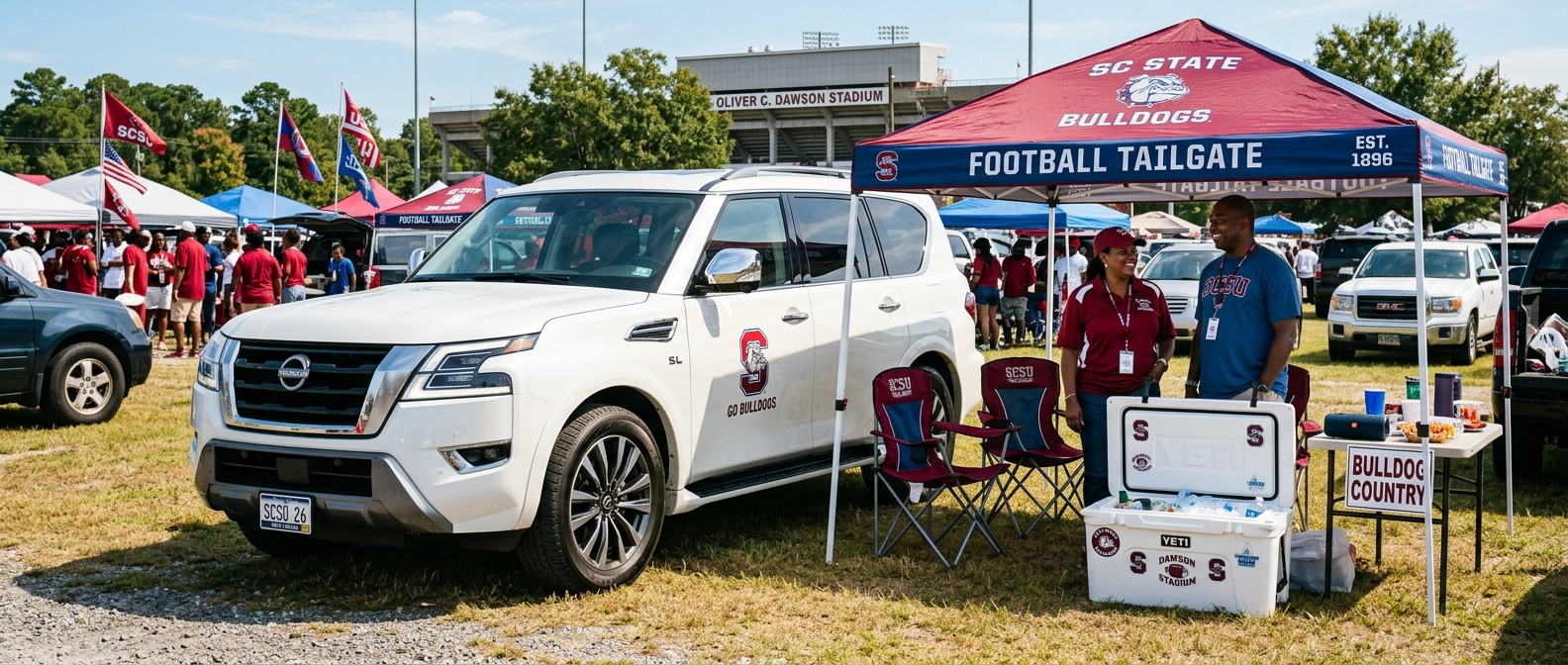
Football season in Orangeburg isn't a low-key affair. The SC State Bulldogs enter 2026 as reigning HBCU national champions, home games at Oliver C. Dawson Stadium are drawing crowds deep into five figures, and if your household runs six or more people, moving that crew together in one vehicle is a real logistics problem worth solving before the first kickoff.

The 2026 Nissan Armada seats up to eight, and that's the headline every spec sheet leads with. Whether it actually works for your family comes down to two decisions most articles skip. First, do you spec the bench, which seats eight, or the captain's chairs, which seat seven. Second, do you go rear-wheel drive or four-wheel drive for the way you drive around the Midlands. Get those two right and the Armada fits beautifully.

Get them backward and you'll pay for it one of two ways. You'll either be short a seat or buying capability your roads never ask for.

Browse the 2026 Nissan Armada on our lot and our team can walk you through which configuration fits your family's actual routine.

The 2026 Armada's real value for big families isn't raw seating alone. It comes from matching the configuration to your headcount, cargo load, and how you actually drive in Orangeburg County.

How Do the Armada's Seating and Cargo Systems Actually Work?

The configuration decision lives almost entirely in the second row, where a bench seat carries eight passengers across three rows and captain's chairs carry seven while opening a center aisle that makes the third row far easier to reach. Both layouts earn their place, so the right pick depends on how many people you're moving. The captain's chairs come standard on Platinum trim and are optional on others.

Cargo is where the Armada's body-on-frame architecture pays off. Nissan lists 20.4 cubic feet behind the third row with all seats occupied, and that's the practical game-day number. A 60-quart cooler, a canopy bag, and a gear duffel will get you close to full. Fold the third row flat and total cargo opens to 97.1 cubic feet, per Nissan's published specs. The EZ FLEX second-row system is a genuine convenience, giving one-handed access to the third row when you're loading kids and gear at the same time. It helps in a packed lot.

The tradeoff breaks down like this.

ConfigurationPassenger SeatsCargo Behind Row 3Max Cargo (All Rows Flat)Best For
2nd-row bench seat820.4 cu ft97.1 cu ftFull crew; carpools; max headcount
2nd-row captain's chairs720.4 cu ft97.1 cu ftEasier 3rd-row access; smaller groups
3rd row folded, 2nd up5 or 6Expanded97.1 cu ftMax gear with smaller party
All rows folded097.1 cu ft97.1 cu ftHauling large equipment or gear hauls

The practical choice. If your crew is reliably seven or eight, go with the bench. If your typical group is five or six and you've got kids or older adults who find the step-over an awkward reach, the captain's chairs improve daily usability. You lose no cargo doing it.

Which Setup Do You Actually Need for Bulldog Game Days in Orangeburg?

Most Orangeburg families won't need four-wheel drive on this truck, though a couple of game-day situations make it worth a look. The Midlands climate brings very limited ice and no sustained winter snow, so four-wheel drive earns its keep here only in specific parking and terrain conditions rather than everyday driving.

So do you actually need it? For most driving here, no. Orangeburg County roads and the I-26 corridor north to Columbia (roughly 40 minutes) or southeast toward Charleston don't demand it, and the fuel numbers back that up. The EPA rates the rear-wheel-drive 2026 Armada at 16 city / 20 highway / 18 combined mpg. The standard 4WD version comes in at 16 city / 19 highway / 17 combined. You're giving up one mpg combined for drivetrain capability that most Midlands driving patterns don't trigger.

There's one local scenario where 4WD pulls its weight.

  • Overflow parking at Oliver C. Dawson Stadium after a hard September rain can put you on unpaved or grassy terrain.
  • Orangeburg gets significant summer-into-fall humidity and rainfall, and some game-day parking areas use that kind of surface.
  • A loaded Armada with six to eight people and a full cargo section is a heavy vehicle on soft ground.
  • The added traction is meaningful in that specific situation, not theoretical.

Our practical read for most families in this market is straightforward. If you're primarily on paved roads and the I-26 corridor, the RWD configuration handles Orangeburg life capably and keeps the fuel economy numbers favorable. If you regularly park in unimproved lots or make runs on unpaved roads in the county, 4WD is worth considering.

Regardless of drivetrain, Nissan Safety Shield 360 comes standard on every single 2026 Armada trim. The package bundles automatic emergency braking with pedestrian detection, rear cross-traffic alert, blind-spot warning, and lane departure warning. You won't pay extra to reach it.

The Nissan Pathfinder is worth a look if your crew runs five or fewer people. It carries up to eight in a unibody package with a smaller footprint, which makes tighter parking spots easier to manage. The Armada's body-on-frame architecture makes the most sense when you're consistently filling all three rows or towing a trailer to Lake Marion after the game. Properly equipped, the Armada tows up to 8,500 lbs across all six trims, according to Nissan.

Explore Financing Options for the 2026 Armada

Browse current Armada inventory on our lot to see exactly which trims and configurations are available today.

Key Terms Worth Knowing

TermWhat It Means in Practice
EZ FLEX SeatingNissan's one-handed fold-and-tumble second-row system for easier third-row loading
Body-on-frameA truck-style chassis under an SUV body; improves towing capacity and long-term durability
Safety Shield 360Six standard safety-assist features included across every 2026 Armada trim level
ProPILOT Assist 2.1Available hands-off highway driving assist on select trims, mapped for US highway corridors

What This Means for Your Next Vehicle

The 2026 Armada is a solid answer for a family that genuinely fills six, seven, or eight seats on a regular basis, and a poor one for a household that doesn't. If your realistic crew is four or five with an occasional sixth, the Armada's fuel economy and footprint are doing more work than your situation requires.

Where it fits cleanly is the Orangeburg family with a packed third row every game day, a need to tow to the lake on weekends, and a goal to move everyone in one vehicle. For that family, the bench-seat RWD configuration is the sensible pick in this market. Families who want easier third-row access and aren't reliably filling eight seats will find the seven-passenger captain's chair layout more livable every day.

Garnet and blue country has no shortage of big families with complicated logistics. We're glad to help you work through which Armada trim and configuration fits yours.

See available 2026 Armada trims at Nissan of Orangeburg

By the Nissan of Orangeburg Team | September 2026
Frequently Asked Questions

Does the third row in the 2026 Nissan Armada fit adults, or is it really just for kids?

The 2026 Armada's third row is genuinely usable for adults on trips of moderate length. The body-on-frame platform gives the Armada a tall roofline and enough floor space that adults aren't forced into a severely cramped position. The configuration decision matters most for access, since second-row captain's chairs allow a clean walk-through while the bench asks for more of a step-over. For typical Orangeburg game-day runs of 30 to 90 minutes on I-26, adults in the third row manage comfortably.

Is RWD enough in Orangeburg, or should I pay for 4WD on the 2026 Armada?

For most Orangeburg County families on paved roads and the I-26 corridor, rear-wheel drive handles the Midlands climate well. There's limited ice and no sustained snow season here, so 4WD's biggest local use case is soft or wet parking, the kind that shows up at overflow grass lots after a hard September rain. The EPA rates the RWD Armada at 18 combined mpg versus 17 combined for the standard 4WD configuration. If you don't regularly encounter unpaved terrain or wet-grass parking, RWD is the practical and fuel-efficient choice for this market.

Nissan of Orangeburg

2827 St Matthews Rd, Orangeburg, SC 29118

(803) 813-1000

Read More
CATEGORIES »
TAGS »

09-10-26

The 2026 Nissan Kicks Makes Orangeburg Restaurant Runs Actually Enjoyable

A practical guide to trim selection for the 2026 Nissan Kicks in Orangeburg driving. Learn how each S, SV, and SR trim balances safety, convenience, and technology, and discover why this compact crossover excels at navigating tight restaurant parking lots and local errands on city streets.

Around Orangeburg, the 2026 Nissan Kicks stands out as the smartest small crossover for anyone driving here regularly, and most of its real value shows up before you ever get on I-26.

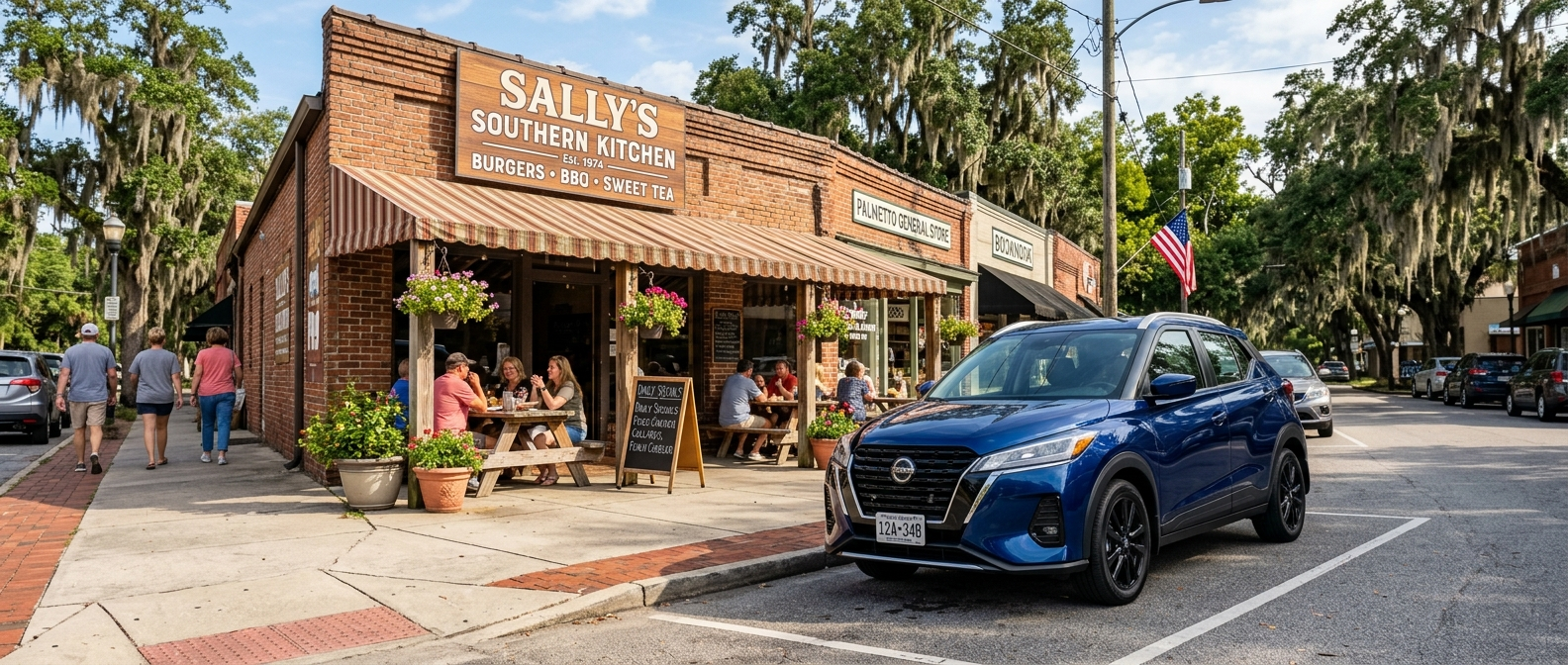
The 2026 Nissan Kicks was never meant to be a highway cruiser. Think of it as a parking-lot navigator, a quick-errand machine, and a genuinely comfortable seat for the ten-minute hop from your neighborhood to Hutto Seafood Market and Kitchen on Hutto Street or over to The Original House of Pizza on John C. Calhoun Drive. The question worth asking is which trim fits how you use it in a city this size.

Sorting that out is what this guide does.

What Do You Actually Get at Each Trim Level?

Every 2026 Kicks ships with more standard equipment than it did a year ago, so even the base trim carries real weight now, while the higher tiers still earn their keep for anyone who wants extra tech and convenience. Nissan moved the 12.3-inch NissanConnect touchscreen and full Nissan Safety Shield 360 down to the base S trim for 2026, which used to require stepping up. It changes the value math at every tier.

TrimWhat You Actually GetWho It's For
S12.3-inch touchscreen, wireless Apple CarPlay and Android Auto, Safety Shield 360 (AEB, Blind Spot Warning, Lane Departure Warning, Rear Cross-Traffic Alert, High Beam Assist), push-button start, cruise control, 141 hp 2.0L engineDrivers who want modern safety and navigation with no frills and nothing wasted
SVEverything in S, plus wireless charging pad, 17-inch wheels, Intelligent Key with approach unlock and walk-away lock, available Cold Weather Package (heated seats, heated mirrors, rear floor ducts)Daily commuters and families who want convenience features without going full top-trim
SREverything in SV, plus 12.3-inch digital gauge cluster (full dual-screen cockpit), ProPILOT Assist, Intelligent Around View Monitor (360-degree parking camera), available 19-inch alloys, available Bose audio, available panoramic sunroofDrivers who want the most tech and the most style, and will actually use ProPILOT on longer runs to Columbia

AWD is available across all trims for those who want it. The EPA rates the FWD Kicks at 28 city and 35 highway. Add AWD and that shifts to 27 city and 34 highway. The difference is small. For most Orangeburg driving, FWD handles it.

The powertrain is where the honest limitations show up. 141 horsepower through a CVT is comfortable at city speeds and fine on US-301, though it's not a vehicle you drive hard. If you need to merge assertively on I-26 at highway speed on a regular basis, the Kicks will do it and you won't be in danger, but you'll notice you're working the throttle. For restaurant runs and local errands, none of that matters.

Size and Parking: Where the Kicks Actually Wins in Orangeburg

Orangeburg rewards a small footprint more than raw horsepower, and the Kicks fits that pattern, since many of its best restaurants sit in older commercial areas with tight parking and narrow driveways, and the compact body gives up only a little cargo room in return. Some of those spaces were never designed for full-size SUVs, and you feel it the moment you try to work one into a spot.

At 171.9 inches long, the Kicks comes in shorter than a standard midsize sedan. Browse current Kicks inventory to see the trim and color combos on our lot, but the footprint stays the same across all of them, compact and light and easy to place. In our experience, drivers stepping out of larger crossovers feel the difference right away, because the shorter body slides into spaces a bigger SUV has to shimmy into.

Ground clearance measures 8.4 inches, better than you'd expect for a vehicle this small. It handles curb cuts, the occasional potholed lot entrance, and uneven driveways without bottoming out. Rough lot entries don't faze it.

On the radar: The SR trim's Intelligent Around View Monitor gives you a 360-degree bird's-eye camera view that makes close-quarters parking in unfamiliar lots noticeably easier. If you regularly park somewhere tight (think the older commercial corridors off Russell Street), it's a real feature, not a gimmick.

Pros and Cons for Orangeburg Local Driving

ProsCons
171.9-inch length fits tight lots and older commercial driveways141 hp CVT powertrain is adequate, not spirited
Standard 12.3-inch wireless CarPlay navigation on every 2026 trimFWD-only on base S; AWD costs more and slightly lowers mpg
Nissan Safety Shield 360 standard (no trim upgrade required)Cargo area (30 cu ft seats up) is smaller than a compact SUV like the Rogue
28 city mpg on regular unleaded (EPA, FWD)No hybrid option in the current lineup
8.4 inches of ground clearance handles rough lot entriesBack seat is tighter for taller adults on longer trips
Wireless charging on SV and SR keeps your phone ready for navigationSR pricing climbs if you add packages

Check financing options if you're weighing S versus SV. The jump in standard content between trims is real, and our finance team can walk through what makes sense for your situation without any pressure.

The Smart Choice for How You Actually Drive Around Here

For most Orangeburg driving, the base S is genuinely capable, since it carries the same 12.3-inch screen, the same wireless CarPlay for navigation, and the full Safety Shield 360 suite you'll find on the SR, so the step up to SV or SR is mostly about convenience and tech, not capability. You give up the wireless charging pad, the digital gauge cluster, and the ProPILOT Assist by staying on S.

  • Worth stepping up to SV? Probably yes, if you regularly do the Columbia run on I-26.
  • The wireless charging pad alone saves you from the dead-phone situation when you've been running errands all afternoon.
  • The Intelligent Key's approach unlock is a convenience you'll notice every single time you walk up with grocery bags from the Harris Teeter on US-601.

The SR makes sense if you want ProPILOT Assist for highway driving or if the dual 12.3-inch cockpit setup appeals to you. Take a look at the Nissan Rogue if your needs have grown beyond what a subcompact can handle. More cargo, more rear seat room. Different use case.

But for the person who just needs a reliable, easy-to-park, well-connected small crossover for daily Orangeburg life? The 2026 Kicks S or SV handles that better than most vehicles at this size.

September in Orangeburg runs hot. The Kicks' standard wireless CarPlay means you've already got your navigation and your playlist ready before you pull out of the lot, without fumbling with cables in the heat. You overlook that kind of detail until you've lived with it for a week.

Making the Right Call at the Dealership

Our advice on the lot matches what we're giving you here, and it comes down to not buying more Kicks than you'll ever use, so if you mostly drive Orangeburg surface streets, park at restaurants, and only occasionally hit I-26 for a Columbia trip, the SV probably lands as your sweet spot. It adds meaningful everyday features without the SR's price jump.

Come in and sit in both. The difference between a 12.3-inch standard touchscreen and the SR's full dual-screen cockpit is something you feel more than you read about. If that matters to you, step up. If it doesn't, save the money and put it toward something else.

The 2026 Kicks earns its keep through everyday usefulness. Smaller city, tighter parking, hot weather, short trips. It was built for exactly that.

Frequently Asked Questions

Does the 2026 Nissan Kicks come with safety features on the base trim?

Yes, and that's one of the clearest value arguments for the 2026 Kicks. Nissan Safety Shield 360 is standard on every trim, including the base S. That suite includes Automatic Emergency Braking with Pedestrian Detection, Blind Spot Warning, Lane Departure Warning, Rear Cross-Traffic Alert, Rear Automatic Braking, and High Beam Assist.

Is the 2026 Nissan Kicks good for city driving and tight parking in Orangeburg?

It fits that kind of driving well. The Kicks is 171.9 inches long, which puts it shorter than most midsize sedans and well under the footprint of compact SUVs like the Rogue. Combined with 8.4 inches of ground clearance and standard wireless Apple CarPlay navigation, it handles the short-hop driving pattern of a smaller city like Orangeburg better than a larger crossover would.

Explore Your Financing Options

Nissan of Orangeburg

2827 St Matthews Rd, Orangeburg, SC 29118

(803) 813-1000

Read More
CATEGORIES »
TAGS »

09-09-26

What Should Nissan Drivers Near US-601 Check During a Tire Inspection?

A practical guide to tire inspection for Nissan drivers. Learn what tread depth, inflation pressure, sidewall condition, and wear pattern reveal about your tires' health and what they indicate about alignment, suspension, and safety. Discover how Orangeburg's heat affects pressure readings, when to replace based on NHTSA thresholds, and what uneven wear patterns tell our service team about underlying vehicle issues.

A complete Nissan tire inspection covers four things. You check tread depth at several points across each tire, cold inflation pressure matched to your model's door-jamb spec, sidewall condition, and wear pattern. For drivers commuting US-601 into I-26 or running Orangeburg County's rural roads in South Carolina's humid heat, getting those checks right on a cold tire (parked at least three hours) is what separates a reading you can trust from one that'll steer you wrong.

See the 2026 Nissan Rogue on our lot

What Do the Numbers on Your Tires Actually Tell You (and When Do They Mean "Replace Now")?

Tread depth gives you the first honest answer, and NHTSA draws the hard line at 2/32 of an inch, exactly where the built-in treadwear indicators sit molded into the groove, though you should treat that figure as the floor you don't want to reach instead of a target to aim for. Wet traction drops measurably at 4/32". September is Orangeburg's rainiest stretch of the year.

Tread DepthWhat It MeansRecommended Action
10/32" to 11/32"Factory new (most passenger all-season tires)No action. Rotate on schedule.
6/32" to 9/32"Good usable life remainingMonitor; rotate per your Nissan's interval
4/32"Wet traction begins dropping noticeablyPlan replacement, especially for rainy-season driving
2/32"NHTSA replacement threshold; treadwear indicators flush with surfaceReplace before driving in rain
Below 2/32"Below NHTSA minimum; tires not safeReplace immediately

Measure at three spots across each tire (inner edge, center, outer edge), because uneven readings act as a diagnosis all by themselves. If one inner-edge groove reads 3/32" while the center still shows 6/32", the tire is telling you alignment or inflation has gone wrong, and you're seeing it well before normal wear would explain it.

The penny test still works for a quick field check. Place a penny Lincoln-head-down into a groove. If you can see the top of Lincoln's head, you're at or below 2/32" and it's time for new rubber. For a more conservative read, grab a quarter instead. If Washington's head clears the tread, you're around 4/32" and edging into the wet-weather zone where stopping distance starts to stretch.

Does Orangeburg's Heat Change What My Tire Pressure Gauge Actually Reads?

Orangeburg's heat absolutely changes what your gauge reads, because for every 10 degrees Fahrenheit the ambient temperature climbs your tire pressure rises roughly 1 to 2 PSI, which means a reading you take after a half-hour on hot US-601 pavement will never match the cold-tire baseline your Nissan was set to at the factory. You'll feel that gap the first genuinely warm morning.

Pull your Nissan Sentra or Nissan Altima out of a sun-baked lot after that drive, and you're reading warm, expanded air. It never matched your cold baseline.

Check pressure only when the tires are genuinely cold, meaning parked at least three hours and driven less than one mile since. NHTSA recommends a check at least once a month. Early morning before the day heats up is the only window you'll really trust. Read the door-jamb placard for your spec, since the number stamped on the sidewall is the tire's maximum handling limit rather than the manufacturer's recommendation for your car.

Orangeburg sits in the South Carolina Midlands along US-601. You'll get your steadiest readings there in the cool of early morning.

The door-jamb placard lists the figure Nissan set for your trim. It's specific to your wheel and load setup.

Here are the cold-tire PSI baselines for the Nissan models we carry, and you should always verify your exact configuration on the door-jamb placard.

Nissan ModelBaseline Cold PSINotes
2026 Nissan Sentra33 PSIConfirm with door-jamb sticker; trim-specific
2026 Nissan Altima~32 PSIVaries by trim; door jamb is authoritative
2026 Nissan Rogue33 PSI (S/SV)Larger 19-inch wheels on SL/Platinum may differ
2026 Nissan Kicks33 to 35 PSIVerify by trim and wheel size
2026 Nissan Pathfinder35 to 36 PSIHeavier platform, higher baseline
2026 Nissan Armada35 PSICheck with load adjustments for towing
2026 Nissan Frontier35 PSIMay vary with payload and towing configuration
2026 Nissan Murano33 to 35 PSIConfirm trim-specific on door jamb

Never bleed air from a hot tire just because the reading looks high. The pressure comes back down on its own once the rubber cools, and bleeding it warm almost guarantees you'll be underinflated by morning. Underinflation makes the outer tread edges carry too much load, wearing them faster and building heat through sidewall flex.

Check your Nissan's tire pressure cold (tires parked 3+ hours) against your door-jamb spec, not the number on the tire sidewall. This matters especially in Orangeburg's summer and early-fall heat.
  • Every 10 degrees Fahrenheit of temperature increase adds roughly 1 to 2 PSI to your reading
  • Orangeburg hits average July highs of 90.5 degrees Fahrenheit with peak humidity in August and September
  • NHTSA says check pressure at least once a month; early morning is the most reliable window locally
  • Underinflation wears outer tread edges faster and generates excess heat through sidewall flex
  • Overinflation concentrates wear in the center of the tread and reduces the tire's contact patch

What Does the Wear Pattern on My Tires Tell Our Service Team?

Wear pattern ranks among the most useful things we look at during a service visit, because the way the tread disappears usually points to something happening beyond the tire itself, from a bent alignment angle to chronic low pressure to a worn shock that no rotation will ever cure. You'll spot a few of these signatures in your own driveway before you bring the car in.

Inner-edge wear (one shoulder wearing faster than the other). Alignment is almost always the culprit here. US-601 carries its share of rough railroad crossings and uneven transitions, the kind of repeated lateral stress that knocks alignment out of spec over time. Book an alignment check, and don't assume a fresh tire alone will solve it.

Center-tread wear (middle wears faster than the edges). Overinflation is doing this to you. The center carries the load while the edges float, so you'll want to check your cold PSI against the door-jamb spec.

Both outer edges wearing faster than center. Chronic underinflation shows itself this way. The tire flexes too much at the sidewall and pushes the load outward, and you'll see the same signature on Frontiers and Armadas running a few PSI low for their load rating.

Cupping or scalloping (high and low spots alternating around the tread). Inflation has nothing to do with this one. Cupping points to worn shock absorbers or struts, so the tire bounces instead of rolling smoothly and the uneven contact chews the tread into a wave. Rotating the tires won't help. Fix the suspension component first.

One-sided feathering (tread blocks rounded on one side, sharp on the other). Toe alignment has drifted off. It usually follows a curb strike or a pothole hit on a rural county road, and it won't correct itself.

Our team checks all four tires for these patterns whenever a car comes in. Catching a wear signature early can turn into an alignment or suspension fix that saves a whole set of tires, which pays off even when you've only booked routine service.

Book your tire inspection with our service team

Frequently Asked Questions

Does my Nissan's TPMS light mean I definitely need air?

Not always, and the reason is easy to overlook. Your Nissan's TPMS warning illuminates when pressure drops about 25% below the recommended cold PSI, by which point the tire is already meaningfully underinflated. TPMS also can't tell you that one tire sits at 30 PSI when your spec is 33. That 3-PSI difference won't trip the light, yet it still affects tread wear over time. A manual check with a gauge, measured against your door-jamb spec, stays the reliable baseline.

How often should I rotate the tires on my Nissan?

Nissan recommends a rotation at every oil change interval, typically every 5,000 to 7,500 miles depending on your model and how you drive. On a Rogue or Pathfinder logging mostly I-26 highway miles, rotation keeps wear even across all four corners. On a Frontier working farm roads and gravel, you'll want to check the tread pattern more often, since uneven load and rough surfaces speed up one-sided wear.

My tires have plenty of tread left but are six years old. Do I still need to replace them?

Age matters on its own, separate from tread. Some vehicle manufacturers recommend replacing tires every six years regardless of remaining tread, because rubber compounds degrade over time from UV exposure and heat cycling. South Carolina's heat and humidity speed that aging along. Check the DOT date code on the tire sidewall, where the last four digits give you the week and year of manufacture. Any tire over six years old earns a professional inspection for heat-related sidewall cracking, even when the tread gauge still reads fine. Don't rely on tread alone.

Nissan of Orangeburg

2827 St Matthews Rd, Orangeburg, SC 29118

(803) 813-1000

Read More
CATEGORIES »
TAGS »

09-08-26

Quiet Brakes Don’t Mean Safe Brakes: The Fall-Rain Truth Orangeburg Drivers Need

A practical guide to brake health before Orangeburg's fall rain season. Learn why quiet brakes don't signal safe brakes, how the region's humid subtropical climate degrades brake fluid over time, and what a pre-rain inspection actually measures. Discover the gap between wear indicator noise and the pad thickness that matters for wet-road stopping.

When fall rolls into Orangeburg, we hear a familiar bit of reasoning. A driver figures the brakes are fine because they don't squeal. That's the myth. The reality is that worn pads and moisture-saturated brake fluid can both degrade your stopping performance well before any noise shows up, and the timing matters because Orangeburg County averages 45.85 inches of rain per year (per the SC DNR State Climatology Office), with the heaviest tropical moisture pushing through in the summer and fall transition. September wet roads aren't a maybe here. They're a certainty.

The short version

  • Quiet brakes are not automatically healthy brakes. Nissan's wear indicators only trigger noise at around 2 mm of friction material remaining.
  • Brake fluid absorbs moisture over time. According to Nissan USA's maintenance guidance, water in the system can turn into a compressible gas under heat, which reduces braking efficiency.
  • DOT 3 fluid's boiling protection drops sharply once moisture enters (FMVSS 116, administered by NHTSA). That matters most under the repeated short-stop driving that I-26 commuters know well.
  • Orangeburg's humid subtropical climate means your braking system has been working through months of high humidity before fall rain even arrives.
  • A pre-fall inspection takes one visit. Waiting for a grinding noise is a more expensive and less predictable plan.

Fall rain in the South Carolina Midlands doesn't give you a long warning. One week it's August heat, and the next you're braking on slick two-lane roads outside town on a Thursday afternoon. Bringing your Rogue (or any Nissan in your driveway) in for a brake check before that shift is the practical move. There's a reason the timing is trickier than it looks, and the common excuses for skipping it don't hold up.

Is That Fall-Rain Squeal Actually Nothing to Worry About?

Sometimes that fall-rain squeal really is nothing, and sometimes it's the first clear signal that your pads are thinning, which is why writing it off on reflex is a gamble worth avoiding before the wet season settles in around Orangeburg. Morning squeals after a wet night get dismissed all the time, and we understand the instinct. The difference that matters sits between surface condensation clearing after the first stop and a wear indicator earning its keep. The table below lays out the five most common brake myths we hear in Orangeburg, what's actually true, and where the facts come from.

The MythThe RealitySource
"If it's quiet, the pads are fine."Nissan's wear indicators create noise when about 2 mm of friction material remains. Pads can wear significantly before that point without any sound at all.Nissan USA Service & Maintenance
"Wet-weather squealing is just moisture, not wear."Surface condensation on rotors can cause brief squealing. But a squeal that persists past the first few stops, or returns every wet morning, points to low pad thickness, not just damp air.Nissan USA Service & Maintenance
"Brake fluid doesn't need service unless something feels wrong."Brake fluid is hygroscopic. Nissan USA's maintenance guidance states that water absorbed into the fluid can evaporate into a compressible gas under heat and reduce braking efficiency. You won't feel that until it's significant.Nissan USA Maintenance Schedules
"My ABS and Brake Assist handle wet-road stopping for me."Those systems optimize the force you apply. They can't compensate for a pad that's below spec or fluid that has lost heat resistance.Nissan USA Service & Maintenance
"Fall rain is less demanding than winter ice, so I can wait."Wet asphalt is the everyday condition that tests your brakes. It doesn't require ice to expose degraded pads or fluid. Orangeburg averages nearly 46 inches of rain annually.SC DNR State Climatology Office
Nissan's wear indicators create noise at roughly 2 mm of friction material remaining. Inspection before that threshold is how you catch wear before the indicator is your only warning.

What Orangeburg's Climate Actually Does to a Brake System

The climate here hits your brake system from two directions at once, and the fall rain everyone watches for is only the obvious half of the problem, since the humidity parked over Orangeburg all summer has already been the quieter half. Most service reminder cards leave that part out entirely.

Orangeburg County is in the South Carolina Midlands. It sits in a humid subtropical climate zone, and the summer runs long, hot, and persistently damp. Brake fluid (DOT 3, the type most Nissan models use) is hygroscopic, meaning it pulls moisture from the air through microscopic pores in rubber hoses and the reservoir. That absorption doesn't stop, and it speeds up in high-humidity conditions. NHTSA's Federal Motor Vehicle Safety Standard 116 sets the performance requirements that show what this costs. Fresh DOT 3 fluid has a minimum dry boiling point of 205 C (401 F), while the wet equilibrium boiling point (measured after moisture contamination) drops to a minimum of just 140 C (284 F). You're looking at a reduction of 65 C built into the federal standard itself, and it represents real thermal headroom lost.

What does that mean on I-26 between Orangeburg and Columbia? In stop-and-go traffic, calipers generate heat on every stop. An Orangeburg commuter running US-601 into downtown or catching US-21 toward Santee isn't doing mountain-road braking, but repeated moderate stops accumulate heat in the system. Fluid that has soaked up a summer's worth of moisture has less margin before it reaches its boiling point and vapor pockets form. Nissan USA's own guidance describes exactly this. Water in the braking system can evaporate into a compressible gas, and gas compresses where fluid does not. The pedal gets less firm. You might not notice it at all until a wet road demands a faster stop.

September makes sense as the window here. You've had the whole humid summer stacking moisture into the fluid.

The fall rains that put standing water on US-301 near Santee or catch drivers on the two-lane stretches of Orangeburg County arrive right when your braking system is holding the most moisture it'll hold all year.

Pathfinder and Altima owners doing the Columbia commute on I-26 put the most wear on their systems in exactly this pattern (consistent moderate stops, high ambient humidity, then rain). Nothing about it is dramatic. It's plain physics.

"Brake fluid level and condition should be inspected regularly to ensure optimal braking performance and replaced as specified to prevent unnecessary wear from contamination." (Nissan USA Maintenance Schedules)

Schedule a Brake Inspection

So What Should You Actually Do Before Fall Rain Hits?

The smart move before fall rain arrives is a multi-point brake inspection, and the reason it beats a quick glance through the wheel is that it puts real measurement behind the decision instead of guesswork about what the pads are actually doing. A technician physically measures pad thickness (and that's more than a glance through the wheel), inspects the rotors for thickness variation that causes pedal pulsation, checks the caliper hardware, and tests or inspects the brake fluid condition. Nissan USA's maintenance guidance is direct about it. Calipers, pads, and rotors should be inspected regularly and replaced when necessary. "When necessary" comes down to measurement, and a quiet system doesn't settle the question for you.

For brake fluid specifically, the service interval in Nissan's owner documentation is built around time as much as mileage, because moisture absorption tracks time in service and ambient conditions as much as miles driven. If your Nissan hasn't had a fluid inspection in more than two years, September is a logical service window. The Orangeburg summer you just drove through is part of the calculation.

A few practical things our service team checks that are easy to overlook

  • Rotor thickness variation. Nissan USA notes that brake pulsation (that steering-wheel shudder when you stop) comes from thickness variation in the rotor rather than a warped disc. Turning or replacing the rotor corrects it, and leaving it alone accelerates pad wear.
  • Caliper hardware. Seized slider pins push one pad to work harder than the other. The inner pad wears faster, and you won't hear it until the wear indicator finally catches up on that side.
  • Fluid color and condition. Fresh brake fluid runs clear to amber (per FMVSS 116 / DOT 3 standards). Darkened fluid has been doing its job, and that's the point to refresh it.

You can even pull the reservoir cap in your driveway before you come in. Fresh fluid still runs clear to amber, and a dark pour tells you it's overdue.

None of this needs anything to feel wrong first, and you don't have to wait for a noise. It calls for a scheduled visit before the rainy stretch that Orangeburg County reliably delivers every September and October. Get on our service calendar now, while your schedule has flexibility and before the first hard-rain commute settles the question for you.

Frequently Asked Questions

Do I need to service my Nissan brakes if they feel normal and aren't making noise?

Yes, an inspection is still worth scheduling. Nissan USA's maintenance guidance specifies that pads should be replaced at or before 2 mm of friction material remaining, and wear indicators only create noise when that threshold is reached. An inspection between those points catches wear before the indicator becomes your only signal. In Orangeburg's high-humidity environment, brake fluid condition is a separate item to check regardless of how the pedal feels.

How does fall rain in Orangeburg specifically affect Nissan brake performance?

Wet pavement reduces the friction available between your tires and the road, which puts more demand on your braking system to manage stopping distance. At the same time, brake fluid that has absorbed moisture through a long humid summer has reduced thermal resistance (per NHTSA's FMVSS 116, the wet boiling point for DOT 3 fluid is a minimum of 140 C, compared to 205 C dry). More braking demand meeting reduced fluid performance is the combination that makes a pre-fall inspection genuinely useful, not just precautionary.

Nissan of Orangeburg

2827 St Matthews Rd, Orangeburg, SC 29118

(803) 813-1000

Read More
CATEGORIES »
TAGS »

09-07-26

Used Nissan Rogue and Pathfinder by Model Year: Find the Sweet Spot for St. Matthews Families

A guide to used Nissan Rogue and Pathfinder model years for St. Matthews families. Learn which years offer the best reliability, which ones to avoid due to CVT transmission issues, and how Nissan's 2022 engine and transmission upgrades reset each SUV's dependability story. Discover which model year and body style fits your household's needs.

Shopping a used Nissan SUV is one of the smarter moves a St. Matthews family can make. These hold up well on the US-601 and I-26 run to Orangeburg and Columbia, they seat a real family, and used Rogue and Pathfinder inventory runs deep enough that you've got real choices. The catch is that model year matters a lot with these two. Pick the wrong window and you're chasing a CVT that Nissan itself acknowledged in a class-action settlement. Pick the right one and you're getting a fundamentally better drivetrain at a used-vehicle value. We'll tell you which years we'd feel good pointing a neighbor toward. And which ones to skip.

The short version

  • Rogue sweet spot: 2022-2024. Nissan swapped in a new 1.5-liter VC-Turbo engine for 2022, rated by the EPA at 30 city / 37 highway mpg (FWD), and the CVT reliability pattern improved sharply.
  • Rogue years to watch: 2014-2018. NHTSA logged thousands of powertrain complaints against these years, nearly all pointing at the CVT. The 2017 also carries a documented false-braking investigation.
  • Pathfinder sweet spot: 2019-2020 and 2022-2024. The 2022 Pathfinder ditched the CVT entirely for a ZF 9-speed automatic. Different transmission, different conversation.
  • Pathfinder years to avoid: 2013 and 2015-2018. The 2013 introduced a CVT that shuddered; the 2015-2018 were covered by the same class-action settlement as the Rogue.
  • Always run the VIN through NHTSA.gov before you buy any used Nissan SUV, regardless of model year. A clean history check tells you whether recall repairs were actually completed.

Browse our current pre-owned Nissan inventory to see what's on the lot while you read through the breakdown below.

Which Rogue and Pathfinder years are the real sweet spots?

For the Rogue the sweet spot is 2022 and newer, while for the Pathfinder you've got two good windows, 2019-2020 or 2022-and-newer, and both of those picks trace back to the same underlying cause, a transmission change that reset each SUV's reliability story.

For the Rogue, Nissan dropped in a new 1.5-liter VC-Turbo engine for the 2022 model year, rated by the EPA at 201 horsepower and 225 lb-ft of torque. It pairs with a redesigned CVT that hasn't produced the documented complaint volume of the older units. The EPA rates the 2022 Rogue FWD (S and SV trims) at 30 city, 37 highway, and 33 combined. That number earns its keep on the long, flat stretch of I-26 between Calhoun County and Columbia, where you're burning fuel at a steady highway cruise. A 2021 Rogue is still the third-generation body, but it ran the older 2.5-liter engine before the 2022 swap, so we'd point budget-minded buyers toward 2022 over 2021 when the gap is small.

For the Pathfinder, 2022 mattered just as much. Nissan replaced the CVT with a ZF 9-speed conventional automatic transmission, paired with the same 3.5-liter V6 (284 horsepower, 259 lb-ft of torque) the model has carried for years. The EPA rates the 2022-2024 Pathfinder FWD at 21 city and 26 highway. You're looking at a bigger, heavier three-row SUV doing honest highway work, and the 9-speed is simply a different drivetrain story than anything from 2013 through 2021. Night and day.

The 2019-2020 Rogue window is also legitimate, and we'll say so plainly. By 2019, Nissan had sorted enough of the mid-generation CVT tuning issues that reliability patterns improved over 2014-2018. We see those years in our service lane without the same recurrence of CVT-related concerns. None of that is an invented claim. You can cross-check the pattern on NHTSA's complaint database yourself.

Model / Year RangeSweet SpotYears to WatchWhy It Matters
Rogue 2019-2020Good pickRun VIN checkImproved CVT tuning; still the older 2.5L engine
Rogue 2021AcceptableCheck build dateThird-gen body, but older engine before the 2022 upgrade
Rogue 2022-2024Best pickNone flaggedNew 1.5L VC-Turbo; EPA 33 combined (FWD); improved CVT reliability
Pathfinder 2019-2020Good pickCheck recall status4th-gen with sorted CVT programming vs. earlier years
Pathfinder 2021AcceptablePre-purchase inspectionFinal CVT year; compare with 2022 pricing
Pathfinder 2022-2024Best pick2022 brake complaints notedNew ZF 9-speed auto; 284-hp V6; genuine 6,000-lb tow capacity when properly equipped

Which years should you watch out for?

The years to watch all share one thread, the CVT, and while that might sound like forum noise, it's backed by hard documentation rather than anything secondhand, which is why we treat those windows as genuine reasons to steer a family elsewhere. NHTSA logged thousands of complaints against 2014-2018 Rogues specifically for powertrain issues, and those describe a consistent pattern of sudden loss of acceleration, shuddering, and overheating, often at highway speeds. Nissan addressed this with a legal settlement covering the 2014-2018 Rogue CVT. Most of those cars sit well outside any remediation window now. The pre-2022 Rogue CVT is the weak point in this lineup, and there's no polishing that away. Buyer beware.

The 2017 Rogue adds a separate concern. NHTSA opened an investigation into false automatic emergency braking on the 2017 model, where the system would trigger unexpected hard stops with no obstacle present. That reads as a documented safety issue, not a comfort complaint.

The Pathfinder's worst windows land on different years. Its 2013 model launched the fourth-generation platform with a CVT that drew widespread shuddering and jerky-acceleration complaints almost immediately. The 2015-2018 Pathfinder fell under the same class-action settlement over CVT issues. If you're eyeing one from that window, get it in writing that any recall repairs were performed before the car changed hands.

See which Rogue years we currently have in pre-owned inventory and explore Pathfinder options on our lot. We can pull the vehicle history on anything we carry before you make a trip out.

The single most load-bearing fact in this guide: Nissan replaced the Rogue's engine for 2022 and the Pathfinder's transmission for 2022, making those two model years the clearest reliability dividing lines in either SUV's recent history.

What our service team sees that the listings don't tell you

We're parked on St. Matthews Road in Orangeburg, so our service lane sees a good cross-section of exactly the driving Calhoun County families do, and that gives us a read the listings can't offer, though it's a pattern read and not a crystal ball. You've got steady highway miles on US-601 between St. Matthews and Orangeburg, then onto I-26 toward Columbia or down toward the coast. That use pattern surfaces CVT heat stress faster than city driving does, because CVTs generate heat under sustained load, and sustained load is what highway cruising means.

When a 2014-2017 Rogue comes in for a transmission inspection, the complaint is almost always the same shuddering or hesitation under acceleration that the NHTSA complaint database describes. The 2022-and-newer Rogues that roll through for routine service tell a quieter story. We're not seeing that pattern. We're basing that on a documented engineering change, not a marketing line.

Skip the guesswork on a private-party car. A pre-purchase inspection runs a few hours and asks for no long commitment. If you're buying from a private seller, bring it to us (or any qualified shop) before you sign. A CVT that's beginning to shudder will show up under a test drive and a fluid check. A 9-speed automatic that needs attention usually flags itself earlier, since conventional automatics speak up before they fail. You get more runway.

See What Your Trade Is Worth

Which year fits which St. Matthews family?

The right year depends on your household, because a two-row commuter, a three-row hauler, and a budget-first shopper each land on a different Nissan, and the good news is that every one of them has a genuinely solid pick in this range.

If you're a two-row family with school-age kids and a commute on US-601 or I-26, the 2022 or 2023 Rogue FWD is the honest recommendation. The EPA's 33 combined rating means the highway portion of that Columbia run genuinely delivers. You're not giving up cargo room that matters for two car seats and a soccer bag, and ProPilot Assist on higher 2022-and-newer trims earns its keep on the I-26 stretch.

If you have three rows of family to carry, step up to the Pathfinder. We'd steer you toward 2022-2024 specifically, because that ZF 9-speed has piled up enough real-world history now to feel like a settled powertrain. The 2019-2020 Pathfinder is the value alternative, with sorted CVT programming and a lower entry point, and if the price gap between a 2020 and a 2022 stays reasonable, the transmission difference makes the 2022 worth a serious look.

If the budget is the primary constraint and you're looking at 2019-2020 Rogues, that's a defensible choice. Just check two things, the NHTSA VIN lookup to confirm whether any recalls were resolved, and the transmission fluid condition on inspection. A clean 2019 Rogue with verified recall history and good fluid is a solid family vehicle.

For the family that also needs occasional towing (a small boat toward Lake Marion or a utility trailer for the property), the Pathfinder's properly-equipped 6,000-pound tow rating is something the Rogue simply doesn't offer. That's a genuine specs difference, not a trim-level technicality.

Explore financing options when you're ready to take the next step. Our finance team works with buyers across Calhoun County and Orangeburg, and getting pre-approved before you shop makes the year-and-trim conversation a lot more focused.

Frequently Asked Questions

What are the best used Nissan Rogue years to buy?

The 2022, 2023, and 2024 Nissan Rogue are the strongest picks. Nissan introduced a new 1.5-liter VC-Turbo engine for 2022, rated at 201 horsepower and 225 lb-ft of torque, and the EPA rates the FWD version at 30 city and 37 highway mpg. The reliability pattern on those years is measurably different from 2014-2018. The 2019 and 2020 Rogues are also reasonable choices: Nissan addressed the most significant CVT tuning issues by then, making them the value picks in the second-generation lineup.

Which Nissan Rogue and Pathfinder years should I avoid?

For the Rogue, steer clear of 2014-2018. NHTSA logged thousands of powertrain complaints against those years, almost all describing CVT-related sudden power loss or shuddering. Nissan addressed this matter with a legal settlement, but most of those vehicles are outside any remediation window now. The 2017 also has a documented NHTSA investigation for false automatic emergency braking. For the Pathfinder, avoid the 2013 (first year of the CVT-equipped fourth generation, with widespread documented shuddering complaints) and 2015-2018 (subject to a class-action settlement over CVT issues).

Is the Nissan Pathfinder reliable for a large family in 2026?

A 2022 or newer Pathfinder is a solid choice for a large family. Nissan replaced the CVT with a ZF 9-speed conventional automatic for 2022, paired with a 3.5-liter V6 producing 284 horsepower and 259 lb-ft of torque. That powertrain doesn't carry the documented complaint history of the 2013-2021 CVT era. The EPA rates the 2022 FWD at 21 city and 26 highway mpg. For families needing three rows and occasional towing capacity, the 2022-2024 Pathfinder is where we'd focus the search. As with any used vehicle, always run the VIN through NHTSA.gov to confirm recall repairs were completed before you buy.

Nissan of Orangeburg

2827 St Matthews Rd, Orangeburg, SC 29118

(803) 813-1000

Read More
CATEGORIES »
TAGS »

Blog | Nissan Of Orangeburg | The Latest Nissan Lineup

Your Matches
Filters

Contact Us:

Name:
Email:
Message: