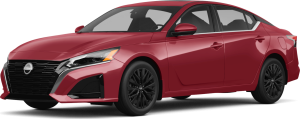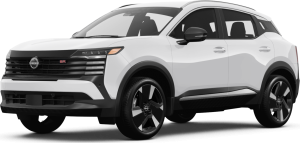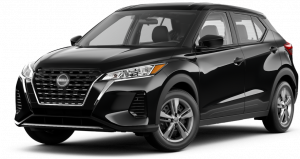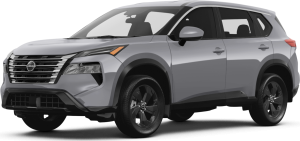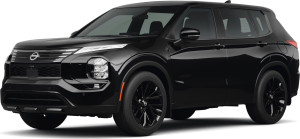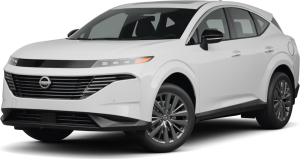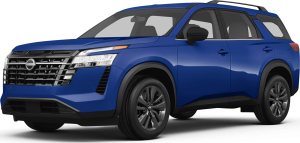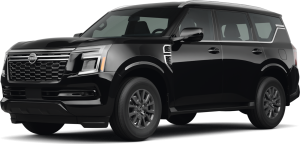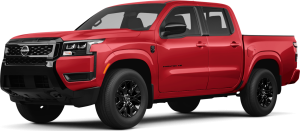

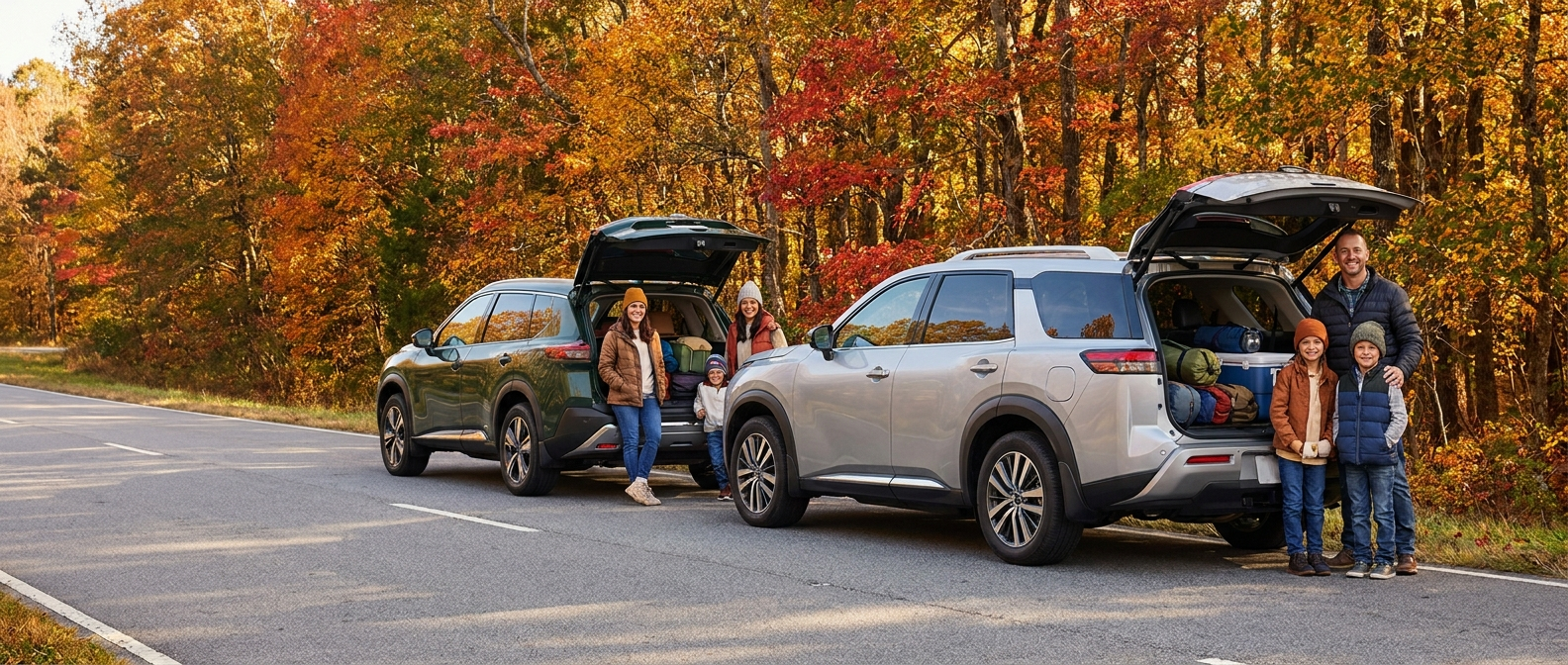
A practical guide to choosing between two Nissan family SUVs. Learn how the 2026 Rogue serves families of five or fewer with superior cargo space and fuel economy, while the 2026 Pathfinder's third row and six-thousand-pound towing capacity fit larger households or those hauling boats and campers to South Carolina's lakes and recreation areas.
Our quick version comes down to one number. For families of five or fewer headed down I-26 to Charleston or out to Lake Marion this fall, the 2026 Nissan Rogue wins cleanly. Families of six or more, or anyone pulling a boat or camper to Santee Cooper, you'll want the Pathfinder instead.
The short version
- Family of 5 or fewer: the 2026 Rogue gives you more usable cargo space, better fuel economy, and an easier driving size for everyday Orangeburg life.
- Family of 6, 7, or 8: the 2026 Pathfinder is the only one with a third row, and it tows up to 6,000 lbs when properly equipped.
- The Pathfinder's cargo area shrinks to 16.6 cubic feet when all three rows are occupied. Less than a compact car trunk, so full passenger loads and full gear loads don't coexist.
- Both earn NHTSA 5-star overall safety ratings. The Pathfinder also holds an IIHS TOP SAFETY PICK+ designation for 2026.
- The Rogue returns up to 32 mpg combined (EPA, FWD). The Pathfinder returns 23 mpg combined (EPA, FWD). On a 150-mile round trip to Charleston, that gap adds up.
What's the Real Difference Between These Two Nissans?
They're built for two different-sized families, and the gap runs wider than most comparison posts admit. Both come well-equipped, both carry Nissan Safety Shield 360 standard, and both will carry you comfortably up and down US-301 or the I-26 corridor. The size difference, though, is fundamental.
| Category | 2026 Nissan Rogue | 2026 Nissan Pathfinder |
|---|---|---|
| Rows / Seating | 2 rows / 5 passengers | 3 rows / 7 or 8 passengers |
| Engine | 1.5L VC-Turbo I-3, 201 hp | 3.5L V6, 284 hp (295 hp Rock Creek) |
| Transmission | Xtronic CVT | 9-speed automatic |
| Drivetrain | FWD standard, AWD available | FWD standard, 4WD available |
| EPA Combined MPG | 32 mpg (FWD) / 31 mpg (AWD) | 23 mpg (FWD) / 22 mpg (AWD) |
| Cargo behind last row | 36.5 cu ft | 16.6 cu ft |
| Max cargo (all rows down) | 74.1 cu ft | 80.5 cu ft |
| Max towing (properly equipped) | 1,500 lbs | 6,000 lbs |
| NHTSA Overall Safety | 5-Star | 5-Star |
| IIHS Award | TOP SAFETY PICK | TOP SAFETY PICK+ |
Does the Third Row Actually Help, or Does It Eat Your Cargo Space?
Yes it helps, but only when you actually fill those seats, and the rest of the time it costs you the cargo room you came for. That trade is the one plenty of Rogue-versus-Pathfinder comparisons skip, and it's the one our team weighs most for a fall adventure.
Fold the Pathfinder's third row flat and it opens to a generous 45 cubic feet behind the second row. Drop both rear rows and you reach 80.5 cubic feet total, which is excellent for a gear run. The catch shows up when you load six, seven, or eight people, because then that third row stands up and you're left with 16.6 cubic feet behind it. That's room for a few backpacks and a soft cooler, nothing close to a weekend of luggage plus camping gear.
Full seats and full gear just don't coexist in a three-row SUV this size. Keep that in mind before you count on the back well.
The 2026 Rogue carries 36.5 cubic feet behind its second row (with all five seats in use) and expands to 74.1 cubic feet with the row folded. For a family of four, two adults and two kids, that 36.5 cubic feet swallows strollers, a full-size cooler, sports bags, and the October-weekend gear without any Tetris. The Pathfinder earns its keep when you genuinely need seats for six or more. If your headcount sits at five, you're trading cargo space for a row you'll rarely use.
There's one more spec worth knowing before you decide. The Pathfinder's maximum 6,000-pound towing rating requires either the Platinum or Rock Creek trim, or an available tow package on SV or SL trims. Without that package, the base SV and SL are rated at 3,500 pounds. That distinction matters a lot if a jon boat or a small camper is part of your Lake Marion plan.
Which One Wins on Fuel Economy for SC Road Trips?
On fuel the Rogue wins, and it isn't close, though the Pathfinder claws back some ground with a bigger tank. The EPA rates the 2026 Rogue at 29 city / 36 highway / 32 combined mpg for front-wheel-drive models. That's a genuine standout number. On FWD trims, the EPA rates the 2026 Pathfinder at 21 city / 27 highway / 23 combined. Both figures are for the standard non-Rock-Creek configurations.
On a 150-mile round trip from Orangeburg to Charleston along I-26 (mostly highway), that 9-mpg combined differential is real money over time. The Rogue's 36-mpg highway rating stretches noticeably further per tank than the Pathfinder's 27. If your family makes that run often for work, college drop-offs at Claflin or South Carolina State, or weekend visits, fuel costs will pile up in a way that's worth factoring into the decision.
Does the bigger tank cancel the mileage gap? Not quite. The Pathfinder's larger 18.5-gallon tank does mean fewer stops, but the Rogue's efficiency advantage holds on the commuter and highway driving most Orangeburg families actually do.
Browse our current Nissan inventory to see which trims are available on our lot right now.
Fall Road-Trip Practicality Beyond the Numbers
Beyond the spec sheet, the right pick splits along the kind of fall trip you take, and families around here plan two very different kinds. One crowd chases cargo volume for gear, the other chases seats for people, and that split decides the SUV more than any single number does.
The camping-and-gear crowd headed toward the Santee Cooper lakes around Lake Marion needs cargo volume more than passenger count. A family of four loading kayaks on a roof rack (both SUVs support that), a cooler, a tent, and four overnight bags is better served by the Rogue's 36.5 cubic feet of flat, accessible cargo floor. With the third row up, the Pathfinder's 16.6-cubic-foot rear compartment is a real limitation for gear-heavy trips.
The large-group-and-carpool crowd hauling two youth soccer teams down US-601, or loading up grandparents for a Thanksgiving run, has the math inverted. Six or more people means the Pathfinder is the only answer. Its tri-zone climate control keeps all three rows comfortable, and the standard second-row bench seats eight. The available second-row captain's chairs (on SV, Rock Creek, SL, and Platinum trims) reduce that to seven but improve third-row access considerably.
Fall weather in the Midlands treats either vehicle kindly. October in Orangeburg runs mild and dry. Intelligent AWD is available on both the Rogue and the Pathfinder 4WD if you want added traction on early-morning rural roads or for occasional dirt-path access to a lake landing. In our climate, though, FWD handles the vast majority of SC fall conditions without any trouble.
So Which One Should You Pick?
Match yourself to one of these two profiles and the choice makes itself, because the split really does come down to headcount and gear rather than badge or feature list. Pick by how many seats you fill on a normal week and how much you haul, and the rest follows.
Pick the 2026 Rogue if your household regularly carries five or fewer people, you want strong fuel economy on the I-26 commuter corridor, and cargo space outranks a third row you'd use now and then. The Rogue's 201-hp turbocharged engine, 32 mpg combined (EPA, FWD), and 74.1-cubic-foot maximum cargo volume make it genuinely capable for fall family adventures without the size penalty of a three-row midsize.
Pick the 2026 Pathfinder if your family regularly needs six, seven, or eight seats, you plan to tow a boat or camper to Lake Marion and need maximum towing capacity (with the right trim or tow package), or you want a larger SUV that can flex between full passenger mode and full cargo mode depending on the week. The Pathfinder's V6 delivers 284 horsepower and a smooth nine-speed automatic, and its IIHS TOP SAFETY PICK+ puts it at the top of the safety class for three-row family SUVs.
Both are solid choices, and neither is a wrong answer. The decision really does come down to your actual headcount and your actual gear load, and now you know the specific numbers behind each. Our finance team can walk you through the trim options that match your situation once you've made that call.
Frequently Asked Questions
Does the 2026 Nissan Pathfinder tow 6,000 pounds on every trim?
No, and that detail matters. The 2026 Pathfinder's 6,000-pound towing capacity is available on the Rock Creek and Platinum trims, and also on SV and SL trims when equipped with the available tow package. Without that package, the SV and SL trims are rated at 3,500 pounds. If towing a boat to Santee Cooper or pulling a travel trailer is part of the plan, confirm the trim and package before you buy.
Is AWD worth it on the Rogue or Pathfinder for South Carolina driving?
For most Orangeburg-area driving, front-wheel drive handles SC's mild winters and typical fall conditions well. The EPA rates the 2026 Rogue's Intelligent AWD at 31 mpg combined, just one mpg below the FWD figure, a minimal penalty if you want the added confidence. On the Pathfinder, the 4WD system includes seven drive modes (including Mud/Rut and Sand on Rock Creek) that go beyond what SC roads usually demand, though AWD adds peace of mind on wet rural roads heading toward the lake in the early morning. If your driving stays on paved roads, FWD on either vehicle is the practical, more fuel-efficient choice.