
A practical guide to choosing between two Nissan sedans for I-26 commuting. The Sentra delivers better fuel economy at 38 highway MPG and suits solo daily runs, while the Altima offers a larger fuel tank, quieter cabin, and more passing power for longer hauls and multiple passengers. Learn which sedan fits your drive pattern and what specs matter most for regular interstate travel.
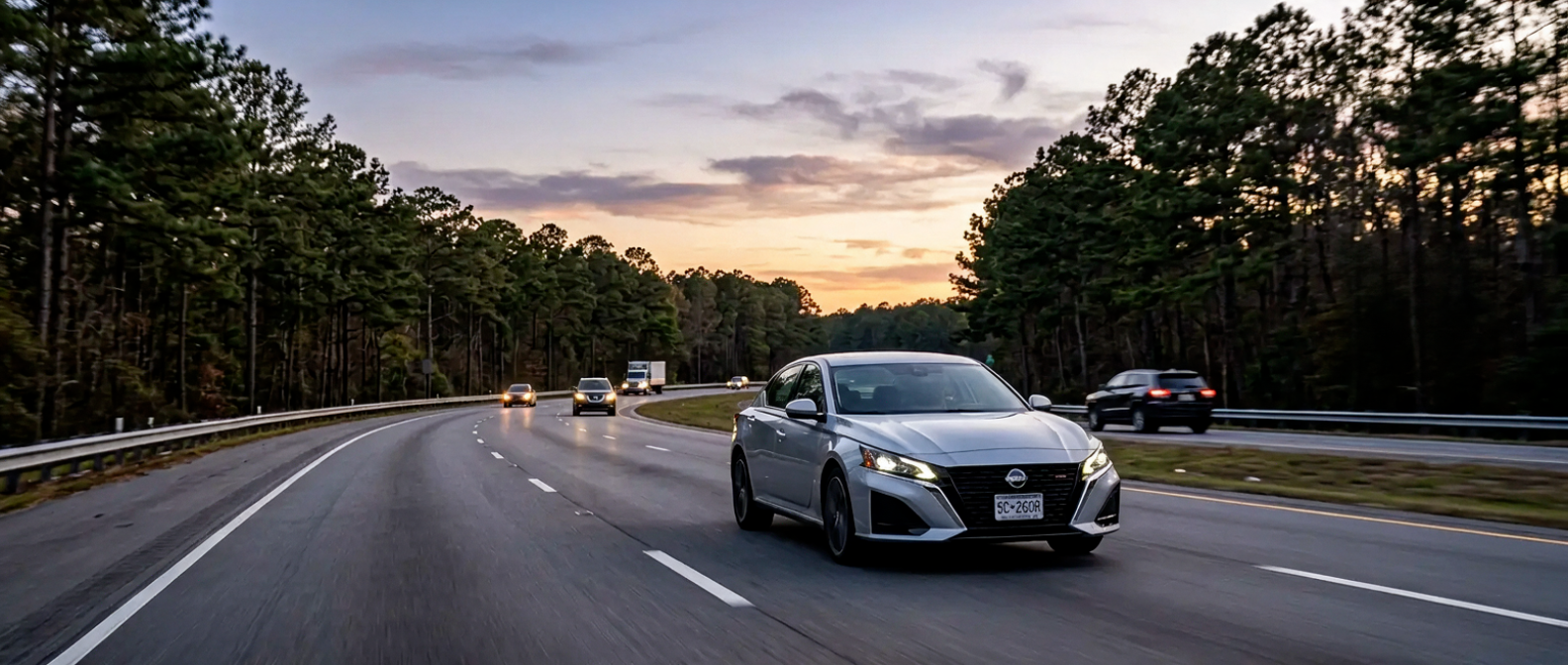
If you're running that Orangeburg-to-Columbia stretch on I-26 five days a week, or making regular hauls down to Charleston, the plain answer is both sedans will get you there. One of them will wear you out less. And it's not always the one you'd guess.
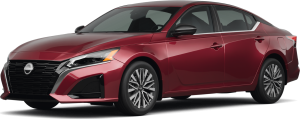
The short version comes down to how you use the road. The 2026 Sentra wins on highway fuel economy and saves you real money over a year of commuting. The 2026 Altima wins on cabin quiet, passing confidence, and the effortless long-haul feel that matters when you've got 75 miles of interstate ahead of you. Neither answer is wrong. It depends on how you use the road.
How Do They Actually Compare on the Road?
The number that matters most for I-26 is highway MPG, and there's a real gap. Nissan estimates the 2026 Sentra (S/SV trims) at 38 MPG highway. The 2026 Altima FWD comes in at 36 MPG highway. Two miles per gallon sounds small until you do the math over a year of driving.
What the spec sheet won't tell you is the rest of the story. The Sentra's 2.0-liter engine produces 149 horsepower, and under hard acceleration (think merging onto I-26 from the US-301 interchange and trying to slot into 70 mph traffic), the CVT can get loud. That's a real tradeoff. The Altima's 2.5-liter engine puts out 188 horsepower on FWD trims, and the extra grunt makes those merge situations feel unhurried. On a flat South Carolina interstate, 39 horsepower isn't a big deal during cruise. It shows up exactly when you need to respond quickly.
Browse our current Nissan inventory to see what's in stock right now.
2026 Altima vs. Sentra: I-26 Highway Comparison
| Category | 2026 Sentra (S/SV) | 2026 Altima (FWD) |
|---|---|---|
| Highway MPG (EPA-estimated) | 38 MPG | 36 MPG |
| Engine / Horsepower | 2.0L / 149 hp | 2.5L / 188 hp |
| Torque | 146 lb-ft | 180 lb-ft |
| Fuel tank | 12.4 gallons | 16.0 gallons |
| Est. highway range (full tank) | ~471 miles | ~576 miles |
| Trunk space | 14.3 cu ft | 15.4 cu ft |
| AWD available? | No | Yes (SR trim) |
| ProPILOT Assist available? | Yes (select trims) | Yes (available) |
The tank size difference is the one worth a second look. The Altima's 16-gallon tank means a full Charleston run (about 75 miles southeast) barely touches the needle. At 38 MPG highway, the Sentra's 12.4-gallon tank still gives you plenty of runway for a Columbia run, though you'll stop more often on longer trips.
Where Do You Charge Up (So to Speak) for the Trip?
Charging up here means fuel stops, so the question for I-26 commuters is how often you're stopping and where. On the Orangeburg-to-Columbia run, there are multiple well-served exits between here and I-20. The Sentra's smaller tank is genuinely fine for that 40-mile leg. Where the Altima's larger tank starts paying off is the 75-mile push toward North Charleston, when you'd rather not think about fuel at all.
Our finance team can walk you through the numbers on either sedan when you're ready to talk specifics.
ProPILOT Assist is available on select trims of both sedans. On the Altima, it's offered on available configurations and uses adaptive cruise control plus lane-centering to reduce the mental load on a long I-26 cruise. On a 40-minute interstate run, that's a genuine quality-of-life feature. The Sentra also offers ProPILOT Assist on select trims for 2026, so this isn't an Altima-exclusive advantage. What matters is which trim you're buying and whether it's equipped.
Pre-Trip Checklist: Setting Up Either Sedan for a Regular I-26 Run
- [ ] Confirm ProPILOT Assist is active and the forward camera view is clear (clean the windshield)
- [ ] Set your adaptive cruise speed before entering the highway, not while merging
- [ ] Note your fuel level. A Sentra at a quarter tank leaves roughly 117 miles of highway; an Altima at a quarter tank leaves roughly 144
- [ ] Tire pressure check before any trip over 50 miles (both sedans specify 35 psi; low pressure raises fuel consumption a fair amount on CVT-equipped cars)
- [ ] If hauling passengers to Columbia or Charleston, factor cargo weight: neither sedan is a hauler, but the Altima's extra torque makes a loaded cabin feel less strained
- [ ] Set your Eco Mode (Sentra) or keep throttle steady (Altima) to hit the rated highway numbers consistently
Get Financing for Your Next Nissan Sedan
Plan Your Drive This Way
The decision is cleaner than most comparison articles admit. Here's what we'd tell a neighbor walking onto our lot today.
For a daily solo commute to Columbia where you're watching every tank of gas, the Sentra is the smarter pick. The EPA-estimated 38 MPG highway is real (NissanConnect trip computers tend to confirm it on flat South Carolina interstates), and the smaller sedan is lighter and easier to park wherever you end up downtown. The Sentra fits that job best.
For multiple passengers, frequent Charleston runs, or drivers who've spent time in a Sentra and felt like they were working harder than they should during merges, the Altima earns the bump. Nissan's Zero Gravity front seat design is built to reduce fatigue on longer drives, and it shows on a 75-mile leg. The cabin also runs markedly quieter at highway speed than the Sentra under load. That's a real difference.
One caveat on the Altima worth naming honestly. For 2026, Nissan simplified the lineup to two grades (SV and SR). The old entry-level trim is gone. If you were counting on a base-grade entry point, that option doesn't exist this year. The Sentra still has four trims (S, SV, SR, SL), with the entry S offering genuine value for a straightforward commuter setup.
See available Altima trims on our lot and compare them to what the Sentra S or SV offers. The gap in comfort features between the two nameplates has narrowed considerably in 2026.
Frequently Asked Questions
Does the 2026 Sentra have enough power for highway driving?
For steady-state highway cruising on I-26, the 2026 Sentra's 149-horsepower, 2.0-liter engine handles it without drama. Where power feels thin is aggressive merging from a short on-ramp into fast-moving traffic. The CVT transmission keeps the engine in its efficiency range during cruise, but hard acceleration requests produce more engine noise than you'd hear in the Altima. If your on-ramp is short or your merge lane is busy, that 39-horsepower difference between the two is noticeable.
Is the Altima's fuel economy good enough for regular I-26 commutes?
Yes. Nissan estimates the 2026 Altima FWD at 36 MPG highway (EPA-estimated figures per Nissan). That's a strong number for a midsize sedan with 188 horsepower. On a 40-mile Orangeburg-to-Columbia run, the Altima's 16-gallon tank means you could run three full round trips before you're looking for a gas station. The trade-off compared to the Sentra is two fewer highway miles per gallon, which adds up over a year of five-day commuting but isn't a dealbreaker for most drivers.
Can I get ProPILOT Assist on the Sentra, or is it only on the Altima?
ProPILOT Assist is available on select 2026 Sentra trims, not just on the Altima. For 2026, Nissan made ProPILOT Assist available across both nameplates on qualifying trim configurations. It uses adaptive cruise control and lane-centering to reduce highway driving fatigue. The practical difference is that you need to confirm the specific trim is equipped, because not every Sentra or Altima on the lot includes it. Our team can check exactly which units in our inventory carry the feature before you come in.