
A practical guide to choosing the right Nissan Rogue model year for families in the Orangeburg area. Learn how powertrain changes, CVT settlement history, and fuel economy improvements across generations affect ownership experience, and which model years offer the best balance of reliability and value for highway commuting and local driving.
Short version, we'd steer you toward a 2022 or newer Rogue if you can swing it, and we'd think hard before dropping below 2019. The year you pick changes the engine, the transmission calibration, and the ownership experience more than any other single variable on the used Rogue market. We're not being vague about that. Nissan made a documented powertrain swap between the 2021 and 2022 model years, and a class-action settlement covered CVT failures in 2014 through 2018 models. For a family running I-26 between Orangeburg, Columbia, and Charleston on a regular basis, those details matter in a very concrete way.
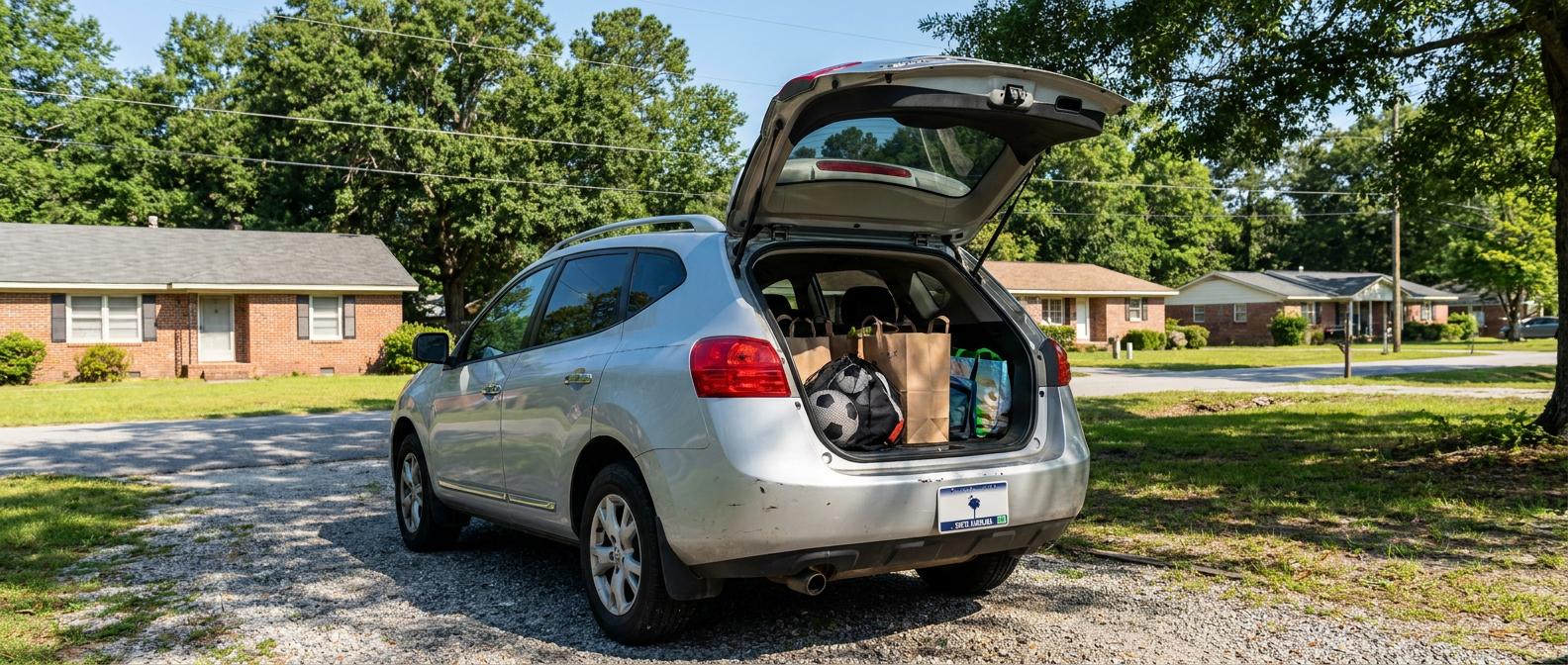
We've sold and serviced plenty of Rogues here at Nissan of Orangeburg, and one pattern keeps repeating. Families who land on the right year get a practical, fuel-efficient SUV they're genuinely happy with for years. Families who buy the wrong year spend too much time at an independent shop, sorting out a transmission that was already struggling before they drove it home. We wrote this guide to help you land in the first group.
Browse our current pre-owned inventory to see which model years are on the lot right now while you read through the breakdown below.
The short version
- Sweet spot: 2022-2024 Rogue (turbocharged 1.5L engine, 201 hp, EPA-estimated 30 city / 37 hwy FWD, the powertrain Nissan finally got right)
- Solid runner-up: 2019-2020 (late second-gen with refined CVT software; a reasonable lower-budget choice)
- Inspect carefully: 2021 (good redesign, but 10 NHTSA recalls including fuel pump and wheel-stud concerns; always run the VIN first)
- Avoid or scrutinize hard: 2014-2018 (subject of a major CVT class-action; the settlement remediation window has now closed for most of these vehicles)
- Skip entirely: 2013 and older (first-gen CVTs with well-documented failure histories and no remaining remediation path)
- Local note: For I-26 highway miles to Columbia or Charleston, the 2022 engine's EPA-rated 37 mpg highway is a real improvement over the pre-2022 second gen's 32 mpg highway ceiling
Which Rogue years are the sweet spot for a used family buy?
The 2022 through 2024 model years are the ones we'd point an Orangeburg family toward first, mainly because Nissan finally sorted the powertrain, though you'll pay a little more for that peace of mind than you would on an older second-gen car. Starting with the 2022 model year, Nissan replaced the old 2.5-liter four-cylinder (carried over from the first and second generations) with a turbocharged 1.5-liter three-cylinder producing 201 horsepower and 225 lb-ft of torque. That's the same engine architecture used in the current 2026 Rogue. The EPA rated the 2022 Rogue FWD at 30 city / 37 highway and the AWD version at 28 city / 35 highway. For a family making the roughly 40-mile run up I-26 to Columbia or the 75-mile haul to Charleston, those highway numbers show up at the pump every week.
The 2024 model year added a mid-cycle refresh with updated exterior styling, improved infotainment in upper trims, and a revised Xtronic CVT. It sits at the top of the used third-gen range and earns its slight premium when you find one in solid condition.
| Model Year | Engine | EPA City / Hwy (FWD) | Cargo Seats Up / Folded | Key Change |
|---|---|---|---|---|
| 2014-2020 | 2.5L 4-cyl, 170 hp | ~26 / 32 mpg | 32 / 61 cu ft | 2nd gen; CVT problems 2014-2018 |
| 2021 | 2.5L 4-cyl, 181 hp | 27 / 35 mpg | 36.5 / 74.1 cu ft | 3rd gen redesign; 10 NHTSA recalls |
| 2022-2023 | 1.5L Turbo 3-cyl, 201 hp | 30 / 37 mpg | 36.5 / 74.1 cu ft | New engine, revised CVT (sweet spot) |
| 2024 | 1.5L Turbo 3-cyl, 201 hp | 29 / 36 mpg | 36.5 / 74.1 cu ft | Mid-cycle refresh, upgraded infotainment |
| 2025 | 1.5L Turbo 3-cyl, 201 hp | 29 / 36 mpg | 36.5 / 74.1 cu ft | Rock Creek off-road trim added |
Nissan lists 36.5 cubic feet of cargo space behind the rear seats and 74.1 cubic feet with the seats folded across the entire third generation. That covers two kids' weekend gear, a Costco run, and still fitting in a standard garage. Real numbers for real family logistics.
If budget points you toward the second generation, the 2019-2020 models are the late-refined versions of that platform. By those model years, Nissan had addressed the CVT software logic and cooling-system management that caused failures in the 2014-2016 cars. The fuel economy gap between a 2019 and a 2022 is still real (roughly 5 highway mpg), and so is the cabin quality step-up.
Which years should you watch out for?
The 2014 through 2018 models carry the heaviest documented history of any Rogue generation, and while a clean example can still run for years, this is the range where we'd want the most convincing paperwork before we'd let a family drive one home. Nissan faced a class-action lawsuit over CVT failures across those years and settled. Per NHTSA complaint data, the core problem was sudden loss of acceleration (sometimes mid-intersection, sometimes on a highway on-ramp) caused by a CVT that would overheat and drop into limp mode. For many of these vehicles today, the settlement remediation window has closed.
Our service team can pull the recall and service history on any used Rogue you're considering before you commit.
Go back further, and the 2013 and older first-generation cars show similar CVT complaint patterns with fewer remaining remediation options. We'd steer most Orangeburg families away from anything pre-2014 as a daily driver.
The 2021 Rogue is the nuanced case. The redesign itself was genuinely good, with a stiffer structure, a quieter cabin, and the first real exterior update in years. The problem is the 2021 accumulated 10 NHTSA recalls, covering fuel pump failure risk (engine stalls while driving), wheel studs that could break and cause wheel separation, rear seatback welds found insufficient for child-seat retention in crashes, and a fuel hose that could leak and create a fire hazard. Those are serious enough that we want to see complete recall documentation on any 2021 before we'll recommend it. Some have had every recall fully addressed and they're perfectly fine to own. Others haven't.
One newer concern is worth knowing about. NHTSA issued recalls in early 2026 covering 2023-2025 Rogues (more than 323,000 vehicles) for a potential engine bearing failure in the VC-Turbo engine that could cause hot oil to leak and create a fire risk. It has nothing to do with the old CVT issues. If you're buying a 2023-2025 used Rogue, confirm via the NHTSA VIN lookup that this recall's been resolved. Any Nissan dealer can run the check at no charge.
| Pros | Cons |
|---|---|
| 36.5 cu ft cargo seats-up, 74.1 cu ft folded (3rd gen) | 2014-2018 CVT failures extensively documented |
| 201 hp turbo engine from 2022 onward | 2021: 10 NHTSA recalls, some safety-critical |
| EPA 30 city / 37 hwy FWD (2022-2023) cuts highway fuel costs | 2023-2025: engine bearing recall; verify completion before buying |
| Third-gen cabin noticeably quieter than second-gen | 2021 still runs older 2.5L engine, not the turbo |
| Safety Shield 360 standard across 3rd gen | 2022+ turbo too recent for 100K-mile reliability data |
Our finance team can walk you through options for different model-year ranges and help you match the right year to your budget.
Schedule a Pre-Purchase Rogue Inspection
Which year fits which Orangeburg family?
The best year depends almost entirely on how and where you drive, so instead of crowning one model year for everyone, we'll walk through a few common driving profiles around Orangeburg County and match each one to the range that fits.
The I-26 commuter. If you're doing regular highway miles to Columbia or Charleston, the 2022-2023 Rogue's EPA-rated 37 mpg highway is the number that matters most to your monthly fuel budget. It's the easiest recommendation we make.
The family on a tighter budget. A 2019-2020 Rogue in clean condition with documented maintenance is a reasonable choice. The CVT had been meaningfully refined by those model years. Have it inspected first, and skip the 2016-2018 range unless the vehicle history is exceptionally clean.
The family who wants the latest safety tech without buying new. A 2024 Rogue is the right call. You get the refreshed interior, stronger infotainment, standard Safety Shield 360 (automatic emergency braking, blind-spot warning, rear cross-traffic alert), and the turbo powertrain Nissan has been refining for a few years now. On the used market, 2024 models sit at a point between "almost new" and "noticeably discounted." That's where peace of mind and value actually overlap.
The buyer tempted by a cheap 2015 or 2016. We get the appeal. But the documented CVT failure history on those years, combined with the likelihood that the settlement remediation window has already closed on a given VIN, means a low sticker can turn into a repair bill that erases the savings fast. We've watched it happen. If the budget only stretches to that range, a thorough pre-purchase inspection isn't optional. That inspection is the entire ballgame.
The family doing mostly local Orangeburg miles. Check what your week actually looks like first. School runs near Claflin University, practices around town, weekend trips out to Lake Marion, grocery runs along Russell Street. Russell Street runs through the center of Orangeburg. If that's your profile, a 2022 FWD Rogue is plenty of vehicle and gives you the best fuel economy in the lineup. AWD's worth a look if you travel regularly toward Aiken or the upstate, or if you want extra confidence during the occasional Midlands ice event. For mostly local, mostly dry driving, FWD handles it fine, and the AWD option is there when you want it.
See the Rogues currently on our lot and filter by year to find your range.
By the Nissan of Orangeburg Team | August 2026
Frequently Asked Questions
What is the most reliable used Nissan Rogue year to buy?
The 2022 and 2023 model years are the strongest choices on the used market right now. Starting with the 2022 model year, Nissan replaced the old 2.5-liter four-cylinder with a turbocharged 1.5-liter three-cylinder producing 201 horsepower and 225 lb-ft of torque, paired with a revised CVT. The EPA rated that combination at 30 city / 37 highway for FWD models. Those two years have enough on-road history to show a meaningfully better reliability profile than the pre-2022 generation, and they haven't piled up the recall count the 2021 model did. For an Orangeburg family covering highway miles to Columbia or Charleston regularly, the fuel economy difference alone makes a strong case for going 2022 or newer.
Should I buy a 2021 Nissan Rogue?
The 2021 Rogue is a genuinely better vehicle than the second generation in interior quality, ride comfort, and structural refinement. The catch is it carries 10 NHTSA recalls, including safety-critical concerns around fuel pump failure, wheel-stud integrity, and rear seatback welds affecting child-seat security. It also still runs the older 2.5-liter engine rather than the stronger turbo that arrived with the 2022 model year. A 2021 with complete recall documentation and solid service history can be a good value. Without that paperwork, the risk runs higher than we'd want a family to take on. Run the VIN through NHTSA's recall lookup before you sign anything.
Do Nissan Rogues have CVT transmission problems?
Yes, specifically in the 2014-2018 model years. Those vehicles sat at the center of a class-action lawsuit, and Nissan reached a settlement. Per NHTSA complaint data, documented symptoms included sudden loss of acceleration, shuddering under load, and the transmission dropping into limp mode from overheating. The 2022 and newer Rogues use a substantially revised CVT paired with a different engine architecture, and the complaint profile on those later cars looks meaningfully different from the second-generation era. If you're buying a pre-2019 Rogue, check the vehicle history and inspection report carefully before committing.